
REVIEW · LONDON CITY TOURS
Secrets of the London Underground Small Group Walking Tour
London’s Tube story starts above ground at Baker Street. I like the small-group pace and the way the guide turns familiar stations into real engineering and political history. One catch, you still need your own Zone 1-2 travel card or Oyster/contactless, since transit costs are not provided.
If you’re the type who enjoys how cities work, this tour delivers more than pretty viewpoints. It’s built for history lovers who want a local, on-foot angle at the places you usually just rush through, with lively storytelling from guides such as John, Peter, and Angela. Do bring a rain layer and good shoes, because the walking adds up fast if the weather turns.
Key things I’d watch for
- Small group, big attention: capped at 25 people, so you’re not lost in a crowd.
- Real Tube history, not just photos: the stops focus on early lines, construction, and how the system changed over time.
- Disused and haunted station stories: you’ll hear about abandoned corners of the network that most people never notice.
- Walking plus Tube moves: some parts involve steps and transit segments, so plan for an active 2.5 hours.
- Weather matters: if it’s rainy, you’ll feel it while moving between stops.
- Transit is on you: budget for a Zone 1 day pass or equivalent, since it’s not included.
The point of this Tube-themed walk (and why it feels different)
Most London sightseeing is about surfaces, what’s visible at street level. This tour flips that idea. You get a different angle on London by treating the underground like a living city beneath your feet, then linking it to surface streets you already recognize.
I like that it targets the system itself, not just the landmarks. You’ll learn how the Underground grew during the Victorian era, then you’ll see how stations reflect later design choices and changing passenger needs. The tour also leans into the weird stuff, with stories tied to haunted and disused parts of the network, which is a fun way to keep everyone listening during the walk.
You can also read our reviews of more walking tours in London


Meeting in the middle: starting at Baker Street Station
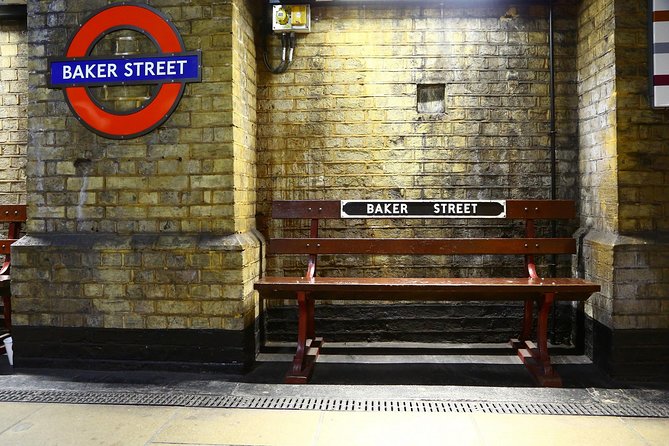
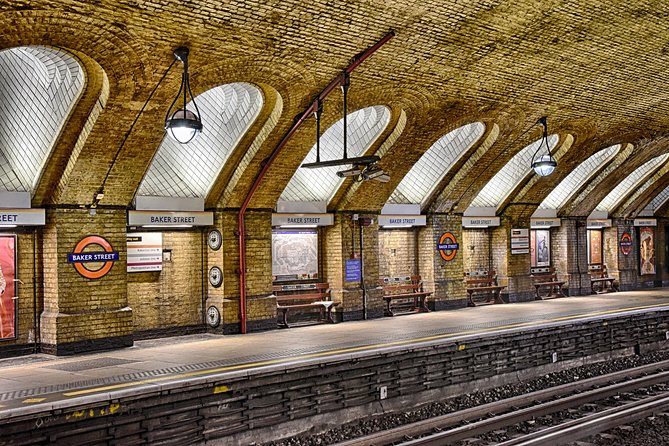
You meet at Baker Street Underground Station in Marylebone. It’s a solid starting spot because it sets the theme fast: this is tied to the Metropolitan Railway, widely recognized as the world’s first underground railway.
What I’d expect from the start is a quick grounding in the idea that London’s Tube was not an overnight invention. It grew in stages, and early decisions still show up in how routes and stations fit the city. You’ll get to take in the station building and location with the guide’s historical framing, which makes it easier to “see” the past while you’re standing in the present.
Why it’s worth your time: this is the kind of opening that helps you understand what you’ll hear later, especially when you reach stations tied to later extensions and redesigns.
Potential drawback: the tour immediately turns into movement, so if you’re hoping for a slow, station-by-station museum vibe, you might wish for more time here.
Oxford Street and Oxford Circus: watching a network change
Next you head toward Oxford Circus Station on the Oxford Street side. Here the focus is the station and line development timeline, including construction that began in 1962 for the initial Walthamstow to Victoria section and the plan for cross-platform interchange.
The tour also connects the dots between how lines were opened in stages, noting that the Victoria line platforms opened on 7 March 1969 and that the station was part of a later extension beyond Warren Street to Victoria.
Why this stop works: Oxford Circus is one of those places you pass through so often that it turns invisible. With the guide explaining the way the interchange plan was built, it becomes a lesson in city-scale coordination, not just a busy junction.
What to consider: this part is centered on specific dates and operational logic. If you prefer stories with more personality and less timeline, you might want to tune in for the big ideas rather than trying to memorize every date.
Green Park and Down Street: the station that couldn’t last
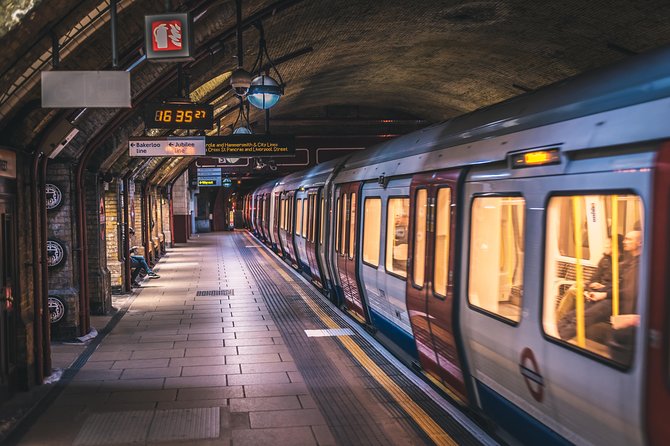
At Green Park, you’ll focus on the Down Street Station story. This station was opened in 1907 by the Great Northern, Piccadilly and Brompton Railway. The tour highlights its later service by the Piccadilly line, its location between Dover Street (now named Green Park) and Hyde Park Corner, and the reason it closed in 1932.
The key point is simple: lack of patronage and proximity to other stations left it with too little demand to keep going.
Why I love this kind of stop: it explains that the Underground is not just heroic progress. It’s also trial, prediction, and sometimes a station fails. You get a sense for how planners thought about footfall and how passengers vote with their feet.
Practical tip: bring your curiosity and let the guide tell the story. Even if you’ve never heard of Down Street, it clicks into place once you understand the geography.
Piccadilly Circus Station: multiple railways, one station concept
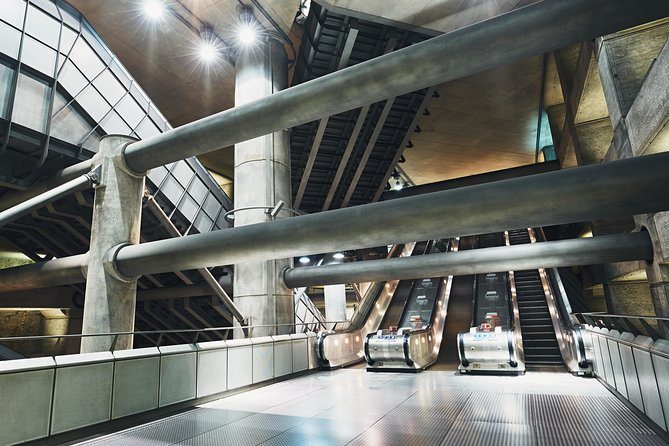
The tour then heads to Piccadilly Circus Station, with the spotlight on when the station opened and how different railways contributed to what you see today.
You’ll hear that Piccadilly Circus Station opened on 10 March 1906 by the Baker Street and Waterloo Railway (today’s Bakerloo line). You’ll also hear that the platforms of the Great Northern, Piccadilly and Brompton Railway (today’s Piccadilly line) opened later on 15 December 1906.
Why it’s a satisfying stop: it shows the Underground as a patchwork that gradually becomes a network. Stations weren’t always built as one clean design, and learning that makes the Tube feel more human and historical.
What to watch for: if you’re expecting a stop that focuses mainly on architecture, this one leans more toward how lines merged and opened. You still get the “so that’s how it works” payoff.





Westminster and Embankment: the Thames edge and the station’s origins
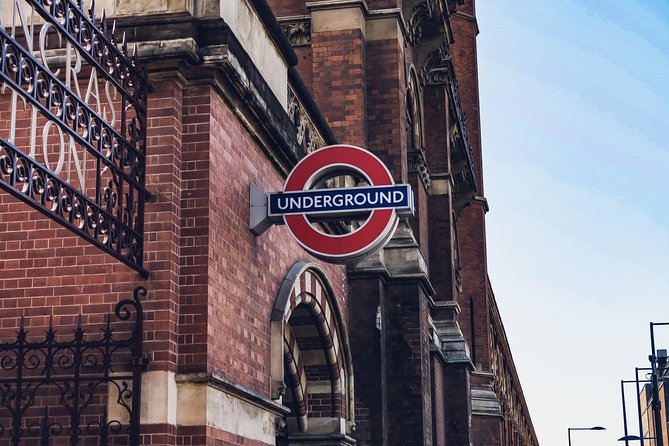
Then you move into the Thames-adjacent zone, with a stop at Embankment Station tied to the broader area along the north bank of the River Thames. The tour describes how Embankment runs from the City of Westminster to the City of London and that it was developed in the 19th century to reclaim marshy land from the river banks.
After that, you reach Westminster Station, where the story begins with its earlier identity: it opened as Westminster Bridge on 24 December 1868 by the steam-operated District Railway (today’s District line). You’ll also hear about the early approach, including access via a passageway from Bridge Street and a pedestrian subway under the road.
Why this section hits for me: it connects the Tube to London’s physical shaping. The Underground isn’t only about digging tunnels. It’s also about changing the city itself, including how land along the Thames was reclaimed and made workable for modern transport.
A consideration: the amount of information here can stack up quickly, since the story covers land development and a station’s earliest form. If you like stories with clear cause and effect, this is a great part. If you want just one theme per stop, ask the guide to summarize the takeaway.
The guide factor: what you can learn from the storytelling style
One of the strongest signals from the tour’s feedback is that the guide makes the history click. On this kind of route, the difference between “I heard facts” and “I got it” often comes down to pacing and how the guide keeps you oriented.
You’ll likely hear a blend of engineering, political context, and dramatic episodes tied to the Underground’s past. The guides mentioned in feedback, including John, Peter, and Angela, are praised for keeping the tone lively and moving at a good clip while still delivering lots of small details.
If you enjoy learning while walking, this format is a sweet spot. You get enough breaks to absorb each stop, but you’re not sitting through long lectures.
What this tour includes, and what that really means for value

The tour includes several “story tools” that matter more than they sound on paper:
- You’ll visit one of the Underground’s original stations, noted as opened in 1863.
- You’ll hear how the system was built during the Victorian era and what tech limitations shaped early design.
- You’ll get stories about haunted and disused stations you’d otherwise miss.
- You’ll learn the variety of roles the Underground has played over time.
That matters because the ticket price is lower than what you might expect for a premium history outing in London, and the real cost-saving is that the guide connects the dots across multiple stations. You’re paying for interpretation, not for a single stop’s brochure-level explanation.
Price and value: $41.13 for 2.5 hours, plus your Tube costs
At $41.13 per person for about 2 hours 30 minutes, this tour sits in a budget-friendly lane for a guided, ticketed history experience. The value improves if you like to see how systems evolve, because you cover multiple key stations and get a guided narrative arc from early Underground through later developments.
The main financial caveat is transit. The tour doesn’t provide a travel card, and you’re asked to have contactless/Oyster/Travel Card valid for Zone 1, with a note to purchase a day travel card for Zones 1 to 2. In plain terms, you should plan for an added transit budget on top of the tour ticket.
Also, the tour includes both walking and transit segments. That’s not a deal-break, but it means your experience will feel active, and your time won’t be purely “stand and read station plaques.”
How the stops fit together as one story
What makes the itinerary work is the progression. You start with the early Underground concept at Baker Street, then you move into the big central junction area around Oxford Circus. After that, you shift to a station that faded because it couldn’t compete, then to Piccadilly Circus where you see how multiple railway origins shaped today’s setup.
Finally, you land near the Thames, where the Underground connects to land reclamation and the evolution of station access around major London landmarks.
So you don’t just hop between interesting points. You get a chain: early engineering goals, later expansion planning, station survival versus closure, and the relationship between transport and city form.
Who should book this tour, and who might prefer something else
This is best for you if:
- You like history with a practical angle, especially how transport networks evolve.
- You’re a station nerd, or you just want to understand what you’re seeing when you ride the Tube.
- You want a small-group walk, up to 25 people, so the guide can keep track of everyone.
You might think twice if:
- You’re limited on mobility, since the tour includes many steps and is not suitable for reduced mobility.
- You dislike planning around extra transit costs, because the travel card is not provided.
- You expected a heavier emphasis on architecture only, with minimal walking and fewer transit moves.
Should you book Secrets of the London Underground Small Group Walking Tour?
I’d book it if you want the Underground story told in a way that makes real stations feel like history, not just wayfinding. The guides get repeatedly praised for keeping the pace lively and sharing lots of small, useful details, including the darker side of Tube lore and disused station talk.
Before you go, do two things to protect your day: wear shoes made for steps and pack for weather. If the forecast is wet, a compact umbrella can save the experience.
If you already have a Zone 1-2 day pass ready, and you like active, guided walking through central London, this tour is a strong value pick for getting oriented fast and seeing London’s transit in a new way.
FAQ
How long is the Secrets of the London Underground Small Group Walking Tour?
It runs for about 2 hours 30 minutes.
Where does the tour start and end?
It starts at Baker Street Underground Station (Marylebone Rd, London NW1 5LJ) and ends at Westminster Station (Bridge St, London SW1A 2JR).
What is included in the tour price?
The tour includes an Underground history-focused visit that covers an original station opened in 1863, stories about how the system was built during the Victorian era, and discussions of haunted and disused stations, plus the Underground’s changing roles over time.
Do I need a travel card or Tube payment method?
Yes. Contactless or Oyster or a Travel Card valid for Zone 1 is required, and travel cards are not provided. There is also a note to purchase a day travel card for Zones 1 to 2.
What days does the tour run?
It operates Apr to Mar, on Tuesdays, Thursdays, and Sundays, except for 24-26 December and 1 January.
Is the tour suitable for guests with reduced mobility?
No. It is a walking tour with many steps and is not suitable for guests with reduced mobility.
More Walking Tours in London



More Tours in London


More Tour Reviews in London
Not for you? Here's more nearby things to do in London we have reviewed










More London City Tours worth a look.
 ★ 4.6The London Eye Entry TicketTickets from $3935,875 guest reviews
 ★ 4.7From London: Harry Potter Warner Bros Studio TourTickets from $11726,588 guest reviews
Westminster to Greenwich River Thames CruiseTickets from $2222,836 guest reviews
Magical London: Harry Potter Guided Walking TourTickets from $2022,044 guest reviews
★ 4.7From London: Harry Potter Warner Bros Studio TourTickets from $11726,588 guest reviews
Westminster to Greenwich River Thames CruiseTickets from $2222,836 guest reviews
Magical London: Harry Potter Guided Walking TourTickets from $2022,044 guest reviews
 ★ 4.6Madame Tussauds LondonTickets from $3620,915 guest reviews
 ★ 4.5Stonehenge, Windsor Castle, and Bath from LondonTickets from $11118,662 guest reviews
 ★ 4.7Warner Bros. Studio Tour with TransfersTickets from $14417,586 guest reviews
 ★ 4.7Tower Bridge Entry TicketTickets from $2115,560 guest reviews