
REVIEW · LONDON CITY TOURS
Royal London: from Saxons to Tudors & Stuarts Walking Tour
London royalty hits different when you walk it. This Royal London: from Saxons to Tudors & Stuarts walking tour strings together nearly a thousand years of monarchy, using real spots around central London as your map. I love the small group of six, and I love how the stories focus on Henry VIII and Anne Boleyn, alongside Charles I and Shakespeare, instead of reading like a dry king list. The catch is it is two hours outside, rain or shine.
Meet at the entrance to Waterstones bookshop at Trafalgar Square, and you quickly spot your guide, described as a quirky short lady. I like that the vibe stays friendly and question-friendly, with guides named Natalie and Nichole showing up in recent leadership. Expect English, lots of talk, and a pace that keeps you moving without feeling like a forced march.
If you are a fan of period dramas like The Tudors, Becoming Elizabeth, Gunpowder, The White Queen, Mary & George, or Outlander, you will get the real-world story angles behind the TV names. I do not think it suits kids under 13 or anyone who needs step-free access, since it is walking only for the full 2 hours.
Key Highlights You Actually Feel While Walking
Small group size of just six people means you get real conversation, not just listening.
The largest royal palace site, now mostly invisible on the ground but explained so you can picture it.
A Stuart-era landmark connected to where Shakespeare premiered plays (not just a generic theater history stop).
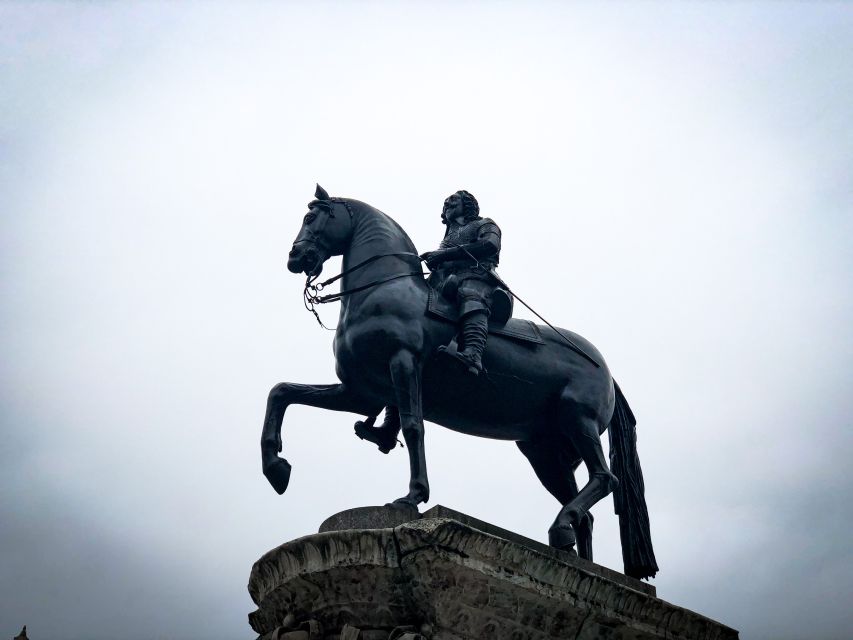
Charles I’s downfall and the place tied to his execution is one of the tour’s emotional anchors.
Henry VIII and Anne Boleyn’s marriage gets tied to why Tudor power changed.
A storyteller who mixes humor with context so the timeline makes sense fast.
Entering Royal London at Trafalgar Square, Not in a Museum
The tour begins at the entrance to Waterstones at Trafalgar Square. That sounds plain, but it is a smart starting choice. Trafalgar Square sits in the middle of London’s “royal government” vibe, so you are not commuting far before you start hearing how kings and queens shaped everyday life.
Right away, the guide frames the walk as a time machine. You move through big labels that usually stay stuck in textbooks, like Saxons, Tudors, and Stuarts. And instead of treating them like separate worlds, you connect the dots. You will also hear the kinds of questions that make the timeline click, including what William the Conqueror did, why the Tudors matter, and who Edward the Confessor was.
One thing I like here is that the walk does not assume you know the order of events. The guide’s job is to help you see why later rulers had advantages or problems rooted in earlier reigns. That matters, because if you only remember dates, monarchy history can feel like a blur. With this format, you remember stories.
You can also read our reviews of more walking tours in London


Following the Largest Royal Palace Site, Even When the Buildings Are Gone
One highlight is exploring the site where the largest royal palace once stood. That is the kind of thing you might miss on your own, because the physical remains may be limited. The point is not to stare at ruins. The point is to learn how a “lost” palace footprint could dominate politics.
This stop works because the guide does what good guides do, they help your brain rebuild the scene. You listen to what the palace represented, why it mattered as a center of power, and how royal decisions were made close to where you are standing. Then you walk a few steps, and the explanations stay fresh because you are still in the same area of London that shaped those decisions.
If you like historical detective work, you will enjoy this. It is not “look, a plaque.” It is “imagine the scale.” The largest palace site gives you context for why later events hit so hard. When power is concentrated in one place, choices ripple fast.
Saxon Roots to Norman Shifts, Why the Early Chapters Matter
This tour ranges from Saxons to Tudors and Stuarts, so you get early foundations too. You will talk about early English rule and transitions, including the impact of William the Conqueror and the role of Edward the Confessor in the larger pre-Tudor story.
Here is the practical value for your brain: early England sets up why monarchy became the central stage for politics. When the guide connects these early chapters to what comes later, you stop thinking of the Tudors and Stuarts as a random succession of famous faces. You start seeing them as part of a long struggle over legitimacy, control, and authority.
Also, you are walking outside for the entire experience, so these early stories help you “warm up” instead of sitting in one spot listening to a lecture. The move-and-talk rhythm keeps the history feeling like a guided stroll, not a classroom.
Charles I and the Moment a Kingdom Turns Personal
One of the emotional highlights is following the footsteps of the love-torn king doomed to be executed. That is tied to where Charles I lost his head. You are not asked to pretend you understand everything at once. You get the story in human terms, plus the political logic behind the break.
Charles I is one of those figures where TV sometimes reduces the story to a headline. This walk helps you see why the monarchy conflict became so irreversible. The guide connects personal stakes and national outcomes, so you understand how a king could be both a person and a symbol.
What makes this stop especially effective is its placement in the walk. Earlier, you build the idea of royal power as a system. Later, you get the system cracking. That shift is what makes the story land.
Even if you already know the basic outcome, you might not know the chain of events or how the guide frames the tone of inevitability. When you hear it while standing near the relevant area in London, the execution stops being just a fact and starts feeling like a turning point.
Henry VIII and Anne Boleyn, The Marriage That Rewired the Tudor Era
The tour includes learning where Henry VIII married Anne Boleyn. That is a big deal in monarchy history, and it is also a big deal in the way people remember the Tudor period today.
In a good tour, romance does not float by as gossip. Here, the guide treats it as power. You learn how the marriage connects to Tudor priorities and why the Tudor era becomes so consequential. Henry VIII is not only about conflict. He is also about decisions, alliances, and the way personal choices can trigger political change.
What I like is that the guide does not keep the story at a surface level. You hear the surrounding context that explains why the Tudor court mattered, why it was so intense, and why this particular relationship became one of the defining royal love stories people still talk about.
If you are drawn to period dramas, this is one of your anchors. You will recognize the names, then you will get the “why” behind them. That is the difference between watching a show and understanding the era it comes from.






Shakespeare Premieres at a Stuart-Era Stop, Where Theatre Meets Power
Another highlight is admiring the Stuart landmark connected to where Shakespeare premiered his plays. This is where the walk becomes fun in a different way. You get to connect monarchy with culture.
You might think of Shakespeare as a standalone genius, but this tour frames him as part of a world shaped by courts and patronage. The Stuart era connection matters because it helps you see theatre as something embedded in politics and public life.
If you are the type who likes to match art to its setting, you will enjoy this segment. It is not just “Shakespeare happened.” You learn how plays fit into the broader royal timeline and why that kind of cultural moment mattered.
Even if you are not a Shakespeare superfan, this is still a strong stop, because it gives you a break from the constant pressure of rulers and executions. It adds texture to monarchy history and shows the softer side of court life.
The Guide Factor, Why This Walk Feels Like a Story, Not a Script
This is where the tour earns its high ratings. The guide makes a real difference. In past operation, guides have been called Natalie and Nichole, and both are praised for a mix of sharp storytelling, humor, and willingness to answer questions.
One thing I value in historical walking tours is when the guide avoids the “usual suspects only” problem. You do hear the headline figures, but you also get context about other rulers who do not always show up in the popular series versions of English history. That changes how you understand the era. You stop treating history like a shortlist of famous people and start seeing it like a chain of choices by many different actors.
You will likely find the conversation style helps the big eras stick in your head. It is also why a group of six works so well. You are not just listening for the next fact. You are processing what you already heard, in real time.
Two Hours Outside, How to Stay Comfortable and Interested
This tour lasts 2 hours and takes place outside the entire time. It runs rain or shine. That sounds obvious, but it matters for your enjoyment level.
Here is how to set yourself up:
- Wear comfortable shoes. You will be on your feet for the full walk.
- Bring an umbrella, since the tour does run in rain.
- Bring a bottle of water to stay hydrated. There are toilets in Trafalgar Square, though opening hours can change.
The pacing is another consideration. The tour is limited to six attendees, and the time flies when the guide keeps the stories moving. You should still expect standing at key points while the guide explains what happened there and why it mattered.
If you hate standing still, plan to get comfortable with short “pause moments” throughout. They are necessary for the historical focus. The good news is the walk stays dynamic, and the moving between stops keeps you engaged.
Price and Value for Central London History
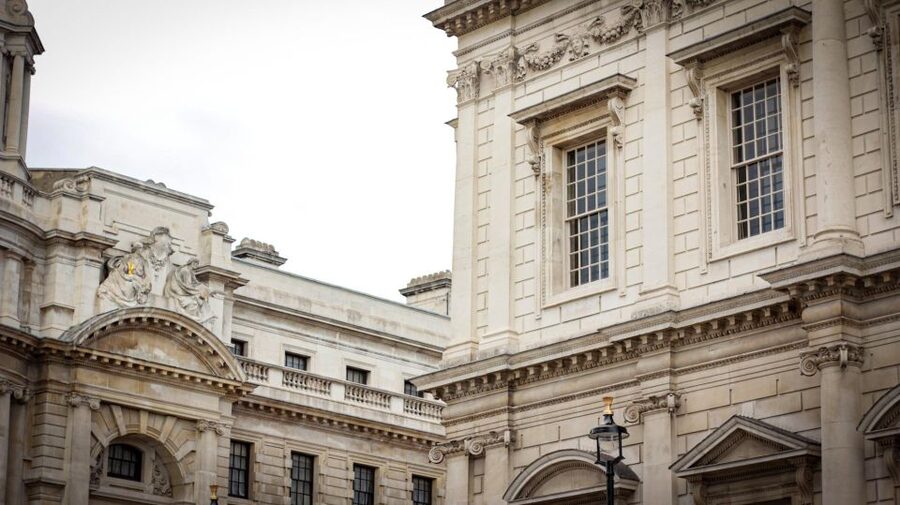
The price listed is $29 per person, which is a fair bracket for a 2 hour guided experience in central London, especially since it includes guiding but no internal admissions. You are paying for storytelling, historical context, and the advantage of having a guide connect Saxons to Tudors to Stuarts in one coherent thread.
Value is not only the cost. It is also what you get in return for the time. Here, you get:
- A tight timeline you can follow on foot
- Major events that remain famous, but with context that helps them make sense
- Stops that would be harder to interpret alone, like the largest palace site where much of the physical evidence is limited
One reviewer mentioned getting a private tour for £15, which suggests pricing can sometimes vary based on group circumstances. I cannot promise that outcome, but it signals that this style of tour can occasionally deliver even better value if you get smaller-than-average group situations.
Bottom line, if you want royal history without spending your whole day on museum lines, this is a solid use of time.
Who This Tour Suits Best, and Who Might Skip It
I think this tour fits best if you want a guided walk that feels like story time with facts attached. It is especially for people who love Royal period dramas, because you will recognize the figures and then learn how the real history fits the drama.
It also works well if you only have a short window in London. Two hours is manageable, and you start right at Trafalgar Square.
I would not prioritize it if you need frequent indoor breaks, or if mobility is an issue. The tour is not suitable for mobility impairments and wheelchair users, and it is not for children under 13.
Should You Book This Royal London Walk?
Book it if you want a smart, lively way to connect monarchy history from Saxons through Tudors and into the Stuarts, with specific moments like Henry VIII and Anne Boleyn, Charles I, and Shakespeare tied to places you can walk through in one smooth route. The small group size and humor-heavy guiding style make it easier to ask questions and keep the story straight.
Skip it if you need the experience to be inside, or if you cannot comfortably walk outdoors for two hours.
If you are ready for a timed, story-led walk that turns famous names into understandable history, this one is an easy yes.
FAQ
How long is the Royal London: from Saxons to Tudors & Stuarts Walking Tour?
It lasts 2 hours.
Where is the meeting point for the tour?
Please meet at the entrance to Waterstones bookshop, Trafalgar Sq, WC2N 5EJ, UK.
What is the group size limit?
Each walk is limited to six attendees.
Is this tour inside or outside?
The tour takes place outside and does not include visits to places of interest.
What should I bring?
Wear comfortable shoes. A bottle of water is recommended, and you may want an umbrella since the tour runs rain or shine.
Does the tour run rain or shine?
Yes, it runs rain or shine.
Are there toilets nearby during the tour?
There are toilets in Trafalgar Square, but opening hours can change.
Is it suitable for children or wheelchair users?
No. It is not suitable for children under 13 years, and it is also not suitable for wheelchair users.
Is free cancellation available?
Yes. You can cancel up to 24 hours in advance for a full refund.
More Walking Tours in London



More Tours in London


More Tour Reviews in London
Not for you? Here's more nearby things to do in London we have reviewed











More London City Tours worth a look.
 ★ 4.6The London Eye Entry TicketTickets from $3935,875 guest reviews
 ★ 4.7From London: Harry Potter Warner Bros Studio TourTickets from $11726,588 guest reviews
Westminster to Greenwich River Thames CruiseTickets from $2222,836 guest reviews
Magical London: Harry Potter Guided Walking TourTickets from $2022,044 guest reviews
★ 4.7From London: Harry Potter Warner Bros Studio TourTickets from $11726,588 guest reviews
Westminster to Greenwich River Thames CruiseTickets from $2222,836 guest reviews
Magical London: Harry Potter Guided Walking TourTickets from $2022,044 guest reviews
 ★ 4.6Madame Tussauds LondonTickets from $3620,915 guest reviews
 ★ 4.5Stonehenge, Windsor Castle, and Bath from LondonTickets from $11118,662 guest reviews
 ★ 4.7Warner Bros. Studio Tour with TransfersTickets from $14417,586 guest reviews
 ★ 4.7Tower Bridge Entry TicketTickets from $2115,560 guest reviews