
REVIEW · LONDON CITY TOURS
Roman Ruins to Blitz Bombings: A Walking Tour of London’s Fiery History
London has a way of setting fires, losing wars, then rebuilding with style. This walking tour links the city’s big turning points, so the past feels less like trivia and more like cause and effect. You’ll move through places tied to royal power, the Great Fire, and wartime damage, with an expert guide who keeps the story clear and entertaining, especially when the focus shifts to London’s disasters and recoveries.
I especially like the small-group size (up to 15 people), because you can ask questions and get answers without feeling rushed. I also like that the route is built around major landmarks and free stops, so even short site visits still feel worth your time. Your tour ends near Fleet Street, which makes it easy to keep going on your own.
One drawback to plan for: this is a long walk for 2 hours, with short stops at each site. If you have mobility limitations, it may feel like too much pavement for too little sitting.
Key things I’d bet you’ll enjoy
- Tom’s storytelling turns familiar sights into a timeline you can actually follow
- 7 focused stops with short, usable moments at each landmark
- Free sights at St. Dunstan in the East and London Stone, plus options nearby for extra history
- Small group (up to 15) for a more personal feel and good Q and A time
- A strong theme of destruction and rebuilding, from the Great Fire to WWII damage
The big idea: London’s disasters, explained walk by walk
What makes this tour click is the way it teaches London through its scars. You’re not just seeing famous buildings, you’re seeing how the city responded when something went terribly wrong. Royal authority, catastrophic fire, and wartime bombings all show up along the route, so the day feels like a timeline you can walk through.
It also helps that the pacing is practical. Each stop is brief, about 5 minutes, which keeps the group moving and prevents the classic problem where you spend most of your time listening while staring at a wall. You get enough time to orient yourself, then your guide connects the dots for what you’re about to see next.
You can also read our reviews of more walking tours in London


Meeting near Trinity Square, then cutting across London’s power centers
You start at 38 Trinity Square, London EC3N 4DJ. From there, you’re walking through some of London’s most historically loaded zones, not just sightseeing in a single neighborhood bubble. The tour uses a mobile ticket, so you can keep your phone ready and skip last-minute paper scrambling.
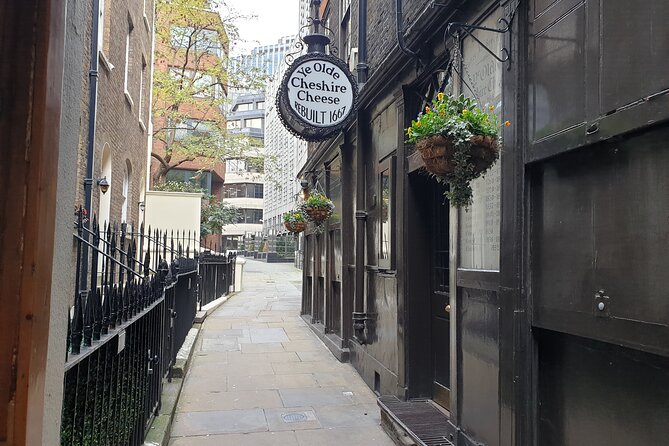
The ending point is outside Ye Olde Cheshire Cheese on Fleet Street, not far from Blackfriars Station. That finish matters because it’s a natural launch pad for food, pubs, and more self-guided exploring without backtracking.
The tour is priced at $27.78 per person for about 2 hours. For central London, that’s a fair trade if you’re the type of person who wants context and direction, not just photos. Also, this one tends to sell sooner rather than later, with an average booking lead time of 37 days, so I’d lock it in when you know your dates.
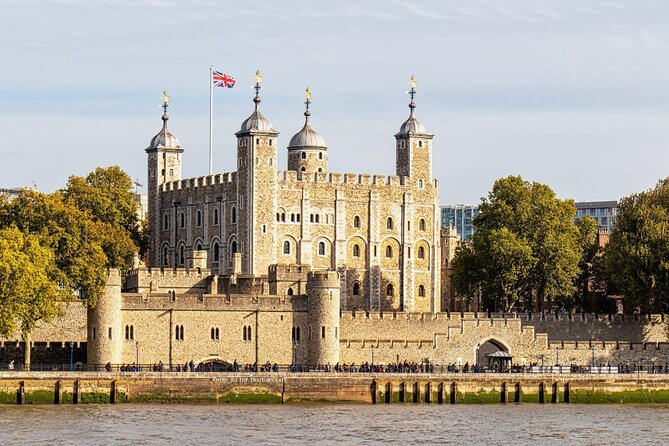
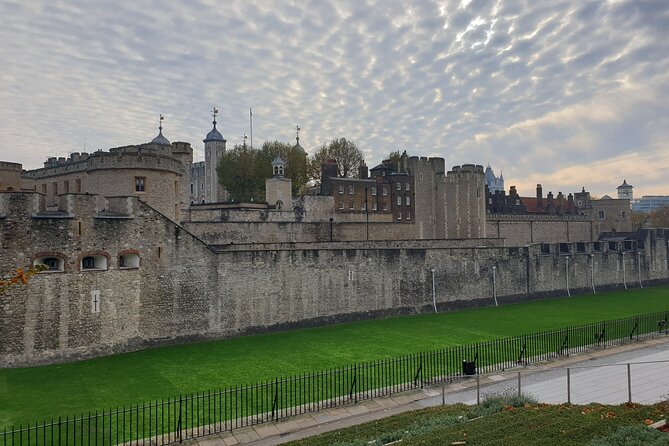
Stop 1: Tower of London, royal power you can feel instantly
Tower of London is your first major anchor, and the tour gives you a quick, high-impact look at Europe’s oldest surviving royal palace. Even if you do not buy entry for the Tower itself, the outside setting and the guide’s framing make the stop matter.
The key value here is context. The Tower is easy to treat as a tourist checkpoint, but with a guided story, it becomes a symbol of authority and control at a time when London’s fate could shift overnight. Your time is short, and admission is not included for the Tower, so treat this moment as orientation plus story, then decide later if you want to return for deeper entry.
Stop 2: St. Dunstan in the East, medieval roots then WWII ruin
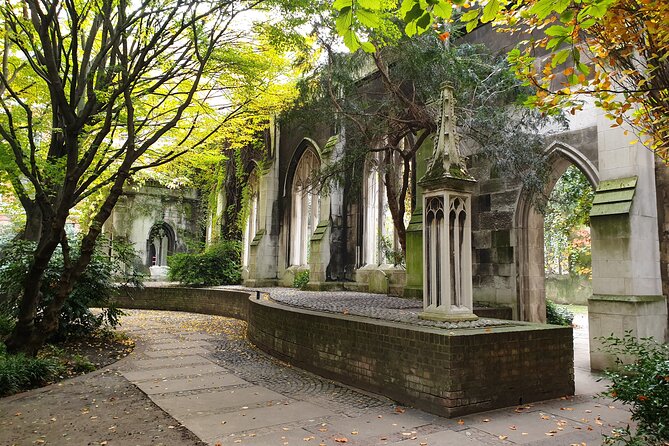
St. Dunstan in the East is one of the stops that gives the tour its emotional weight. You’ll visit the gardens of a medieval church that was destroyed in the Second World War. This is a free stop, so you get the benefit without extra tickets.
What I like about this stop is how it changes your listening mode. The guide is not just pointing at old stones. You’re looking at how a place remembers its own loss, and how London’s layers include both medieval life and modern catastrophe. It’s a strong reminder that the city’s history is not only ancient, it’s also recent.
Stop 3: The Monument to the Great Fire, 1666 in a column of stone
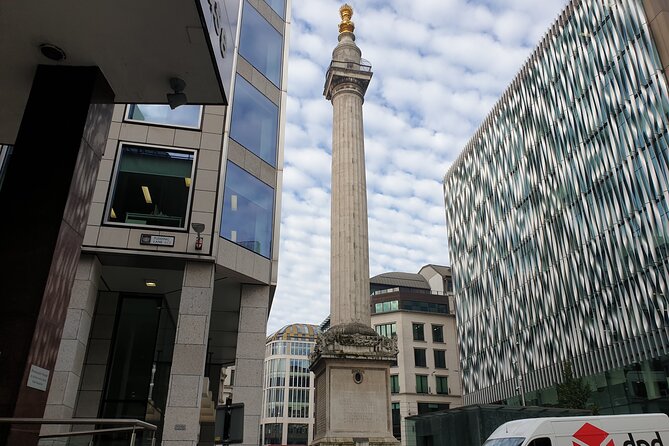
Next comes the Monument to the Great Fire of London, built to mark the 1666 disaster. Like the Tower, admission is not included, and you spend about 5 minutes here. That short time is still useful because the guide frames what the Monument represents, and why a city would memorialize something so destructive.
If you only know the Great Fire from textbooks, this stop helps you connect it to urban design, fear, and rebuilding decisions. You’ll also get a sense of why fire changed how London thought about streets, materials, and how quickly a city can go from normal to emergency.
You can also read our reviews of more historical tours in London




Stop 4: London Stone, legends you’ll remember on your next walk
London Stone is another free stop, and it’s also a fun palate cleanser between heavier themes. The guide explains the stone’s legends, and even without official proof for every claim attached to it, the stories give you a sense of how people long ago tried to make meaning from landmarks.
In practical terms, I like this stop because it teaches you how to read London at street level. You start noticing how certain objects get surrounded by myths, political claims, or local memory. When you’re done with the tour, you’ll likely start spotting other small features that most people walk right past.
Stop 5: Bank of England Museum, money and governance through time
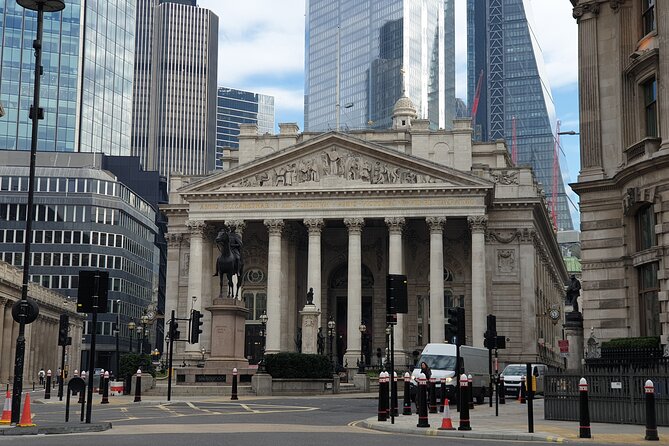
The tour then moves to the Bank of England Museum, the central bank of the UK. Admission is not included, and you only get about 5 minutes, so you’re not expected to do a full museum visit. Instead, this stop is about understanding where modern power sits and how financial systems affect everything around them.
Even with a quick look, you’ll get a sense of why London’s history isn’t only about kings and disasters. It’s also about institutions that keep running, rebuilding, and financing the next chapter. If you decide you want more, you’ll have a better idea of what to prioritize when you return to the museum on your own.
Stop 6: Guildhall, the City of London’s civic heartbeat
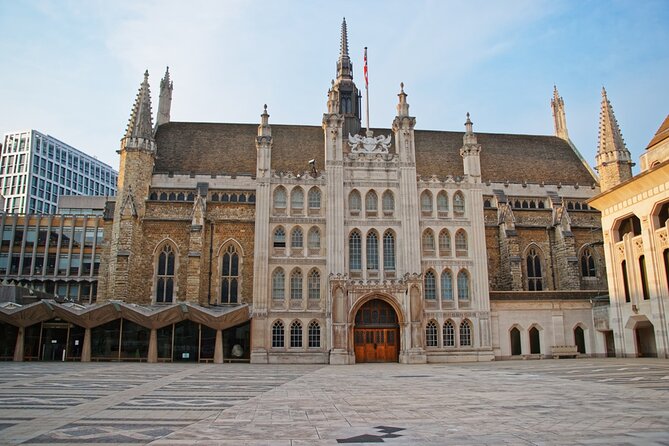
Guildhall is a 15th-century hall connected to the Corporation of London. It’s not just a pretty building, it’s part of how the city governed itself in earlier centuries. With about 5 minutes on the schedule and no admission included, you’re again getting guide-led orientation more than a deep site visit.
This stop works especially well if you like the behind-the-scenes side of history. You’ll hear how civic power operated, how London organized itself, and how that links back to the earlier parts of the walk, like the Tower’s authority and the city’s long memory of threats.
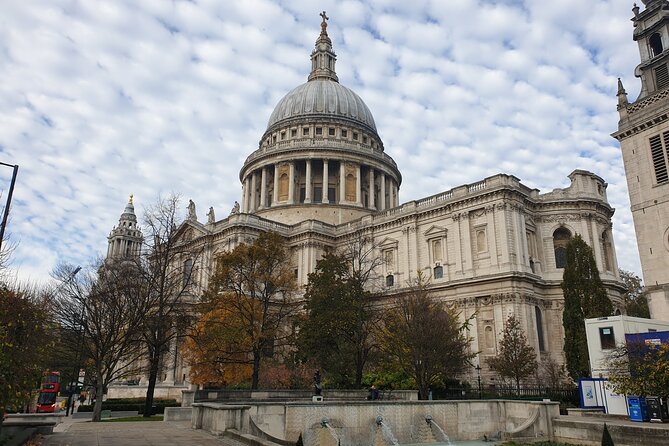
Stop 7: St. Paul’s Cathedral, Wren’s big statement after devastation
You wrap up at St. Paul’s Cathedral, a seventeenth-century cathedral associated with Christopher Wren. St. Paul’s is one of those sights that can feel over-photographed until a guide gives you the why behind it.
In this tour’s overall theme, St. Paul’s lands as a visual conclusion. You’ve seen destruction, marking, and memorializing, then you end at a building that represents rebuilding and identity. Admission is not included, so you’re not doing a full cathedral visit on this schedule, but the guided framing helps you notice details you’d otherwise miss.
What makes Tom’s guidance worth your time
The guide most people talk about is Tom, and his style is a big reason this tour scores so high, with a 5 out of 5 rating from 190 ratings. The common thread in the feedback is his clear storytelling, his strong passion for London, and the way he keeps the group engaged from start to finish.
I also like that he answers questions directly and with enthusiasm. That’s not a small detail. When you’re walking between landmarks, your questions usually come fast, like why a place is remembered a certain way or how one event led to another. Tom’s approach helps you leave with a mental map, not just a stack of pictures.
One more practical bonus from the guide’s style: you’ll get suggestions for what to do next in London after the walk. That kind of local direction is hard to fake, and it’s the reason people often end up seeing more than they planned.
Pacing and comfort: a “2 hours” tour that still feels like a walk
On paper it’s about 2 hours, with short 5-minute stops at seven locations. In real life, that means lots of moving, lots of street-facing time, and not much sitting. The benefit is you cover serious ground across multiple eras in a single morning or afternoon block.
But here’s the fair warning: one of the clearest cautions is that the walk may be too much if you have mobility issues. Service animals are allowed, and the route is near public transportation, but the walking portion is still the main event.
My practical advice is simple:
- wear comfortable shoes you already trust
- plan your stop for snacks or a rest right after you finish near Fleet Street
- keep water handy, especially on busy travel days
Value check: is $27.78 worth it?
If you’re the type who reads placards and actually wants context, the value is strong. You’re paying for guidance, not just access. And since admission is not included at several stops, the tour price looks even more reasonable, because you’re still getting meaning from places you might otherwise speed past.
You also get a small-group setting and an experienced storyteller, which is what most people say makes the difference between a standard “look at that” walk and a real learning experience. The short stops work in your favor too, because you’re not locked into one long museum session.
So I’d treat this as a smart first or mid-trip tour. It helps you understand what you’re seeing as you plan the rest of your days.
Should you book this walking tour?
Book it if you want a guided timeline of London’s big turning points, especially the way the city processes loss and rebuilds itself. It’s a strong fit for history buffs, first-time visitors who want direction, and anyone who likes asking questions while walking.
Skip it or think hard if you need frequent seating or you struggle with longer walking. This is designed for movement, short stops, and constant story links between landmarks.
If you do book, aim for comfortable shoes and come ready to look up as much as you look forward. London rewards that habit, and this guide makes sure you notice what matters.
FAQ
How long is the tour?
The tour lasts about 2 hours.
How much does the tour cost?
It costs $27.78 per person.
What language is the tour offered in?
The tour is offered in English.
Is admission to each stop included?
Not all stops include admission. St. Dunstan in the East and London Stone are free, while places like the Tower of London, the Monument, the Bank of England Museum, Guildhall, and St. Paul’s Cathedral have admission not included.
Where does the tour start?
The start point is 38 Trinity Square, London EC3N 4DJ, UK.
Where does the tour end?
The tour ends outside Ye Olde Cheshire Cheese on Fleet Street, near Blackfriars Station (London EC4A 2BP, UK).
How large is the group?
The tour has a maximum of 15 travelers.
Is a mobile ticket used?
Yes, the tour offers a mobile ticket.
Are service animals allowed?
Yes, service animals are allowed.
Can I cancel for a full refund?
You can cancel for a full refund if you cancel up to 24 hours in advance of the experience start time.
More Walking Tours in London



More Tours in London




More Tour Reviews in London


Not for you? Here's more nearby things to do in London we have reviewed










More London City Tours worth a look.
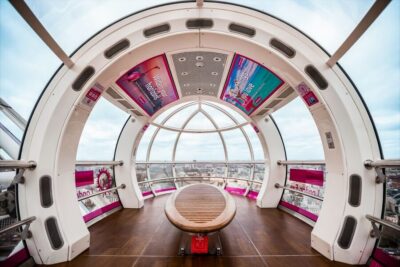 ★ 4.6The London Eye Entry TicketTickets from $3935,875 guest reviews
 ★ 4.7From London: Harry Potter Warner Bros Studio TourTickets from $11726,588 guest reviews
Westminster to Greenwich River Thames CruiseTickets from $2222,836 guest reviews
Magical London: Harry Potter Guided Walking TourTickets from $2022,044 guest reviews
★ 4.7From London: Harry Potter Warner Bros Studio TourTickets from $11726,588 guest reviews
Westminster to Greenwich River Thames CruiseTickets from $2222,836 guest reviews
Magical London: Harry Potter Guided Walking TourTickets from $2022,044 guest reviews
 ★ 4.6Madame Tussauds LondonTickets from $3620,915 guest reviews
 ★ 4.5Stonehenge, Windsor Castle, and Bath from LondonTickets from $11118,662 guest reviews
 ★ 4.7Warner Bros. Studio Tour with TransfersTickets from $14417,586 guest reviews
 ★ 4.7Tower Bridge Entry TicketTickets from $2115,560 guest reviews
Continue by place or experience