
REVIEW · LONDON CITY TOURS
Roman London Private Walking Tour
Roman London hides under everyday streets. This private 3 to 4 hour walk is interesting because it pairs private pacing with below-street discoveries, going from St Pauls into Roman remains you would miss on your own. The one drawback to plan for is solid walking in all weather, plus some big sights are not included in your ticket price, and peak-time access to the Mithras temple can need advance booking.
I like that the tour is built around real city spaces, not a strict museum circuit. You will spend time in the City of London, weave through churchyards and lanes, and see how Roman Londinium lines up with modern London buildings. Guides like Kevin and Stephen are especially good at turning what you see into a story you can picture.
You should also expect a ticket mix. Some stops include admission, while others are exterior viewpoints or church visits where your guide handles the timing but not the entry fee. Dress smart casual, wear good shoes, and bring water. If you have even a small interest in how London became London, you’ll get a lot out of this.
Key things that make this tour worth your time
- Private only for your group, so you can ask questions and move at a comfortable speed
- Unusual Roman finds tied to places like Diana’s former temple and multiple stretches of the London Wall
- Ticketed highlights included, including the Roman amphitheatre and the London Mithraeum
- A route that follows the old Roman lines, so you see the city structure rather than random monuments
- Pickup help from Central London hotels, plus a clear end point near Bank Underground
- Underground moments, where Roman remains sit under modern streets and even inside historic buildings
Why Roman Londinium feels different on foot
London has layers. This is the kind of tour where those layers stop being an idea and start being visible. You are not just looking at a Roman plaque. You are walking the routes that connect Roman walls, gates, baths, bridge traces, and temple sites, and you are doing it slowly enough to notice how often the Roman story repeats in new places.
What makes it work is the mix of big landmarks and quiet corners. St Pauls gives you the starting mood, but the real surprise comes when the guide points to Roman remains tucked away from street view. One of the best parts is how often you will think, how is this right here, and then realize you are walking along the same logic the Romans used to shape the city.
This tour also gives you a practical way to connect dots. After a few stops, you start recognizing the Roman pattern: walls and gates, civic buildings, religious sites, and then the long afterlife of those spaces under later London.
You can also read our reviews of more walking tours in London


Price and what you are truly paying for
At about $254.93 per person, this is not a bargain bucket walking tour. But it can feel like good value if you price it like a private experience plus entry fees plus time savings.
Here is the value angle that matters for most people:
- You get a private guide for the whole 3 to 4 hour window, so you are not squeezed between faster walkers or stuck waiting for everyone else.
- Several major stops have admission included, including the London Roman amphitheatre and the London Mithraeum at Bloomberg SPACE. Those are the kinds of locations that are harder to plan as a casual add-on.
- Your route is designed so you walk a coherent story across the City of London, which reduces the usual time spent hunting for what to see next.
Where the price can feel less justified is if you already know these sites well and plan to visit everything independently. In that case, you might compare the included admissions to what you would pay on your own. Also remember: some attractions on the route are not ticketed as part of the package, so you might still choose to pay for extra interior access at certain stops.
Pickup, route flow, and how much walking to expect
This is a private tour where only your group participates, which changes the whole rhythm. You can ask questions, pause for photos, and settle into a pace that fits your energy level.
Length is listed as 3 to 4 hours, and one review note said the walking can be 7 plus miles. Even if your day runs closer to the lower end, treat it as a real walking outing. You need moderate physical fitness, and you should plan for a continuous morning stroll, not a slow layover.
Weather is not filtered. It runs in all conditions, so you should dress for the day you actually have. Smart casual is the dress guidance, which usually means: comfortable layers, not stiff office wear. Bring a bottle of water, and wear shoes that can handle uneven stone and church entrances without complaint.
St Pauls to St Vedast, starting with Diana’s temple layer
You begin in the shadow of St Pauls Cathedral, where the tour starts with a big idea: this spot carries Roman meaning, because a temple dedicated to the goddess Diana once stood here. That is a strong opening for first-timers, because it frames what you are going to see later. You are not working backward from scraps. You are seeing how the Romans planted religious and civic gravity in places that later London kept using.
From there, you head to the Church of St Vedast alias Foster, where the tone gets more archaeological. The Roman remains here are hidden away from the street, which is exactly the kind of thing that makes a guided route worth it. You do not just read about Roman fragments. You get pointed to where they sit, and you understand how a Roman religious site can become a church context later.
St Pauls is listed with admission not included. You will likely enjoy the experience from the exterior and nearby areas, with your guide guiding where to look. If you want to go inside St Pauls, you should be ready to add that on separately.
Noble Street and Cripplegate, finding the Roman wall where you expect least
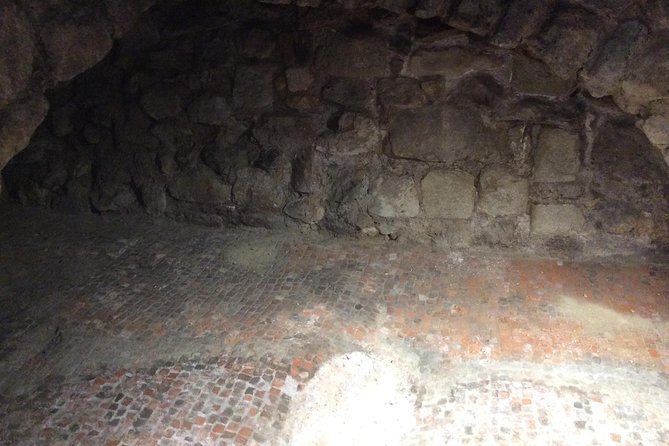
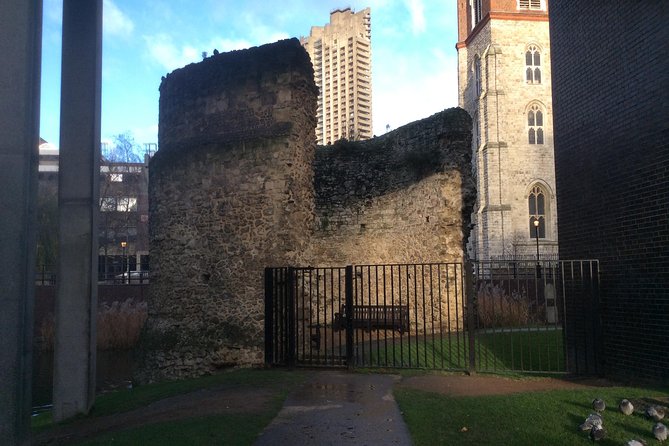
Next, the tour leans into the Roman wall story. You will see a stretch of Roman Wall on Noble Street, and there is a neat historical angle here: the wall came to light thanks to the Luftwaffe during World War II. That detail matters because it shows how modern events accidentally shape what becomes visible to later generations.
Then you reach Cripplegate Street, where you see an old Roman gate and preserved sections of the city wall nearby. Gate sites are important in Roman city planning because they controlled movement. You can see why these locations became power points for the Romans, and why later London keeps circling back to the same corridors.
Both of these stops are listed as free for admission, so you can focus on the visual and story without worrying about extra tickets at each step.
You can also read our reviews of more private tours in London






Guildhall, the Roman amphitheatre, and the City that grew on top
You pass Guildhall, the old hall that dominates its square, and your guide connects it to Roman London in smaller ways than the headlines, but in a way that helps you picture how civic space evolved. Admission here is not included, so treat Guildhall as a viewpoint and orientation stop more than an interior.
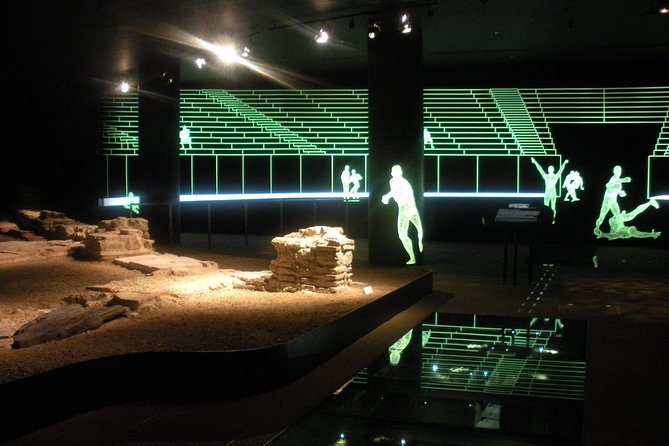
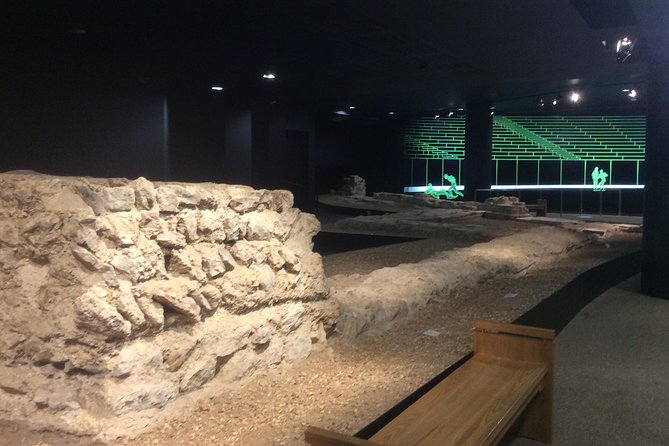
Then comes one of the most satisfying parts of the day: London’s Roman Amphitheatre. This is under the original Roman streets, and it was discovered only a few decades ago. The theme is simple and powerful: you stand where gladiators stood, then look at the layers above you to understand how London grew without erasing the past.
Admission is included at this stop. That means less decision fatigue for you. You get a ticketed, structured experience where the Roman setting becomes physical instead of theoretical.
If you want one word for why this tour works, it is structure. The guide does not just point at stones. They connect the stones to the city layout so the amphitheatre stops feel like part of a map.
Bank to Royal Exchange to Leadenhall, civic London built on Roman lines
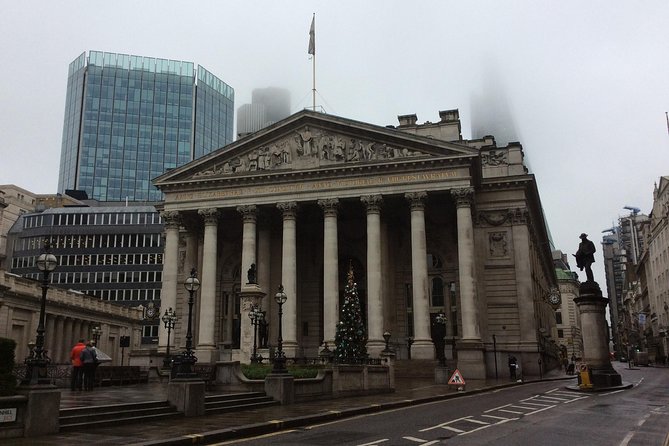
From the Roman amphitheatre, the route moves into the heart of the modern City of London. You will see Bank of England, described as the heart of old Roman London, with its heavy stone presence. Your guide uses that contrast to help you understand how quickly London rebuilt itself while still reusing core routes.
Next, you will stand in front of the Royal Exchange Building, where the tour notes it can feel like being in ancient Rome. Admission is included, so again, you are not asked to pay extra just to access the story.
Then comes Leadenhall Market, which sits on top of its Roman predecessor. The fun here is the idea that if you are lucky, you might see part of the Roman structure where you would not expect it in a working market. Admission is included, so you can experience this as more than a quick photo stop.
The value of this section is the pattern recognition. By the time you reach Leadenhall, you start to see how Roman Londinium did not vanish. It was built over, repurposed, and still shapes what you can reach on foot today.
The Gherkin area, the Unknown Roman Girl, and Aldgate’s buried gate
A short move brings you to 30 St Mary Axe, the Gherkin, where you will find an unexpected Roman memorial nearby. This kind of stop sounds small, but it is often where your brain clicks. You stop thinking of Roman London as a distant theme park and start treating it like a set of street-level clues.
Then you visit the Tomb of the Unknown Roman Girl, presented as a memorial to one of the oldest citizens of London. It is a brief stop, but it is meaningful. Roman remains are often technical and structural, so a personal memorial adds emotional weight and keeps the tour from feeling like only stones and walls.
At Aldgate Square, Roman gate remains are buried beneath a newly landscaped park. You will learn how to see the route of the wall and related clues even when nothing looks dramatic. This is a recurring tour strength: the guide teaches you how to read what is in front of you.
These are mostly free stops, so you get a lot of story per minute.
Vine Street, Emperor Trajan, and the London Wall that keeps reappearing
Your route also includes Vine Street, described as London’s newest museum in this context, with Roman wall and artefacts. Admission is listed as free, which is a nice perk if you like museums but do not want to pay an extra entrance fee on top of a private tour.
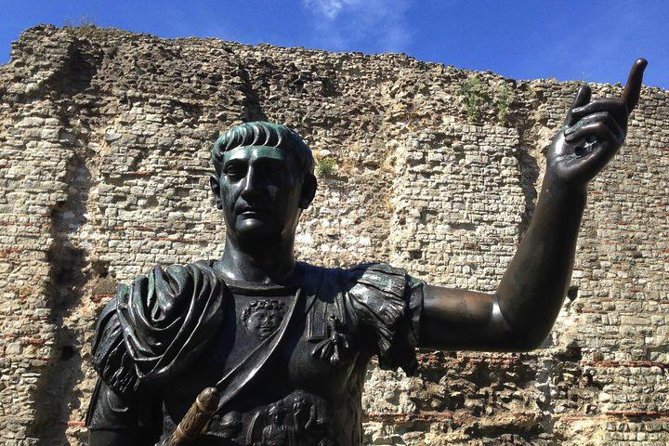
Then you see a statue of Emperor Trajan outside the Tower of London area. This is one of those quick stops that gives you political context. Roman Londinium was not just local life. It was part of a bigger imperial system, and a statue like this helps you place London in that map.
Later in the day, you will revisit London Wall again at a different place. The tour includes admission for this segment, so you are not just passing by from the street. The goal is to show you that Roman defenses show up in multiple forms, and in multiple locations, as London grew and reconfigured the same boundary logic.
Churches with Roman remains: All Hallows, St Dunstan, and the bath and bridge clues
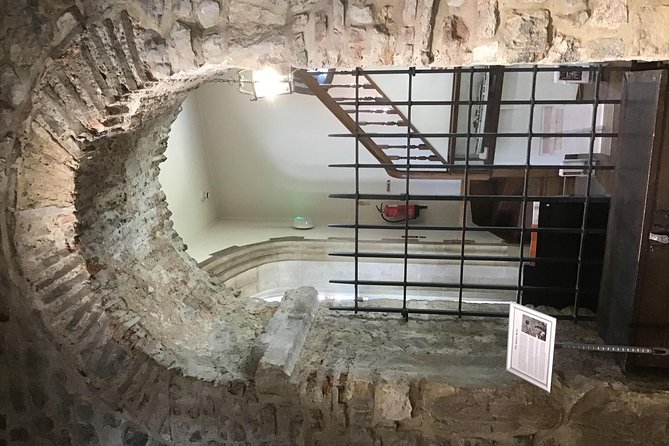
The day takes a turn that many people love: the tour uses historic church spaces to show Roman survivals and Roman house remains. At All Hallows by the Tower, you can see the oldest archway in London and also remains of an old Roman house. Admission is included here, so you can expect a more structured look.
A bit later, you visit St Dunstan in the East. This stop is described as not strictly Roman related, but it is framed as one of the most peaceful ruins in London. Admission is included. Even if you came for Roman London only, this gives you a calm pause and shows how later periods handled the same city geography.
Then you get to Billingsgate Roman Bath House, which focuses on the locations of the Roman baths in London. Admission is not included, so this is likely more of a guided point-and-look section, not a ticketed deep exhibit. Still, it is one of the key Roman city functions. Baths were social and civic, not only about hygiene.
Next is St Magnus the Martyr, where you can see possibly the only remaining part of the original Roman London Bridge. Admission is included. A bridge trace is a powerful way to grasp how Romans connected roads across water.
If you are the kind of traveler who likes when history has a shape you can walk through, you will love this stretch. You go from sacred buildings to baths to bridges, so the Roman city starts to feel complete.
The Great Fire Monument, London Stone, and connecting major eras
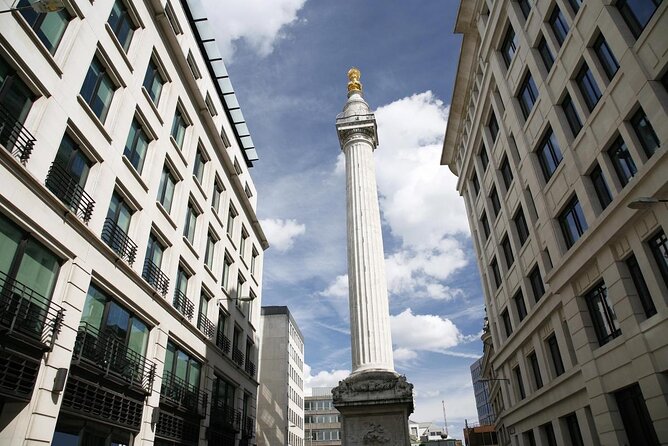
Even though this is a Roman London focus, you still get a wider timeline because the City is stacked. You will visit the Monument to the Great Fire of London, standing on the spot where it started. The tour also points out nearby visuals about Roman Londinium from 2,000 years ago.
That pairing is smart. It shows you that major London turning points happen in the same geography. Fire changed the city, but it did not wipe the Roman logic from the ground. It layered it.
Then you see London Stone, described as legendary and as old as London itself. Admission is listed as free. This is a quick, practical stop, but it gives you a sense of continuity and how London tells its own story through a few enduring touchstones.
These stops work best when you let them do their job. They do not replace Roman ruins. They help you place Roman ruins inside the full London timeline.
London Mithraeum at Bloomberg SPACE, the underground finish that ties it all together
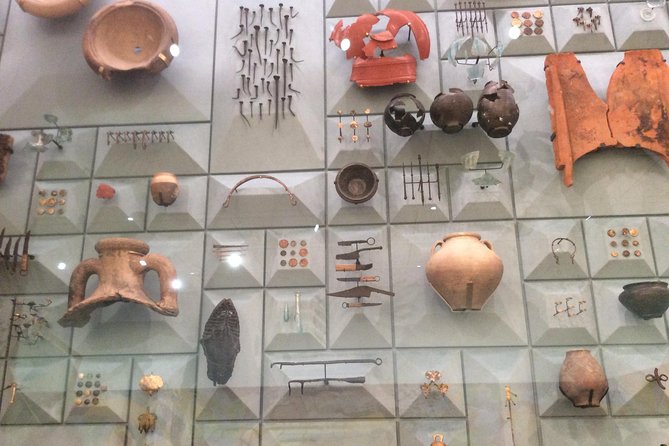
The late highlight is the London Mithraeum Bloomberg SPACE. The tour says you see hundreds of Roman artefacts before going underground to visit the old Temple of Mithras. Admission is included, which is a big deal because it is one of the fewer truly ticketed moments on this route.
This is also where the tour’s “plan ahead” note matters. Guaranteed access to the temple requires advanced booking for peak times. If your travel window falls into a busy season or holiday week, do not assume you will walk in. Book early so your entry lines up with your tour.
What I like about this ending is the way it changes perspective. After seeing walls, gates, houses, and bridge traces, you step into a space built for a different kind of Roman life. Underground, with artefacts around you, Roman religion stops being an abstract concept and becomes a lived setting.
Also, the tour ends right by Bank Underground Station, which makes it easy to grab a late lunch or hop back to your hotel without wrestling with cross-town logistics.
Should you book the Roman London Private Walking Tour?
Book it if you want Roman London the way it actually feels in the streets: mapped, paced for questions, and full of discoveries you would not spot without someone pointing them out. This is a great fit for couples, solo history fans, and families with teenagers who can handle steady walking.
It is not the best choice if you only want short flat sightseeing or if you hate the idea of planning for mixed ticket inclusion. Also, if underground temple access is a top priority, book early, especially in peak times.
One last practical tip: arrive with your walking shoes ready and your expectations set to learn, not just photograph. This tour rewards attention. When you start noticing how often the Roman city layout repeats beneath modern London, the whole day clicks into place.
FAQ
How long is the Roman London Private Walking Tour?
It runs for about 3 to 4 hours.
What is the price per person?
The price is listed as $254.93 per person.
Is the tour private?
Yes. It is a private tour, and only your group participates.
Does the tour offer pickup?
Pickup is offered. You can meet the guide at any Central London hotel, then go by Tube to the tour starting point.
Where does the tour start and end?
It starts at Panyer Alley, London EC2V 6AA and ends at London Mithraeum, Bloomberg SPACE, 12 Walbrook, London EC4N 8AA. The end is right by Bank Underground Station.
What language is the tour in?
The tour is offered in English.
Are tickets included for all stops?
No. Some stops include admission, while others list admission ticket not included. The Roman Amphitheatre and London Mithraeum Bloomberg SPACE are listed as admission included.
Is the Mithras temple guaranteed?
The tour notes that guaranteed access to the temple requires advanced booking for peak times.
What is the cancellation policy?
You can cancel for free up to 24 hours in advance for a full refund. If you cancel less than 24 hours before the experience starts, the amount paid will not be refunded.
More Walking Tours in London



More Tours in London





More Tour Reviews in London


Not for you? Here's more nearby things to do in London we have reviewed











More London City Tours worth a look.
 ★ 4.6The London Eye Entry TicketTickets from $3935,875 guest reviews
 ★ 4.7From London: Harry Potter Warner Bros Studio TourTickets from $11726,588 guest reviews
Westminster to Greenwich River Thames CruiseTickets from $2222,836 guest reviews
Magical London: Harry Potter Guided Walking TourTickets from $2022,044 guest reviews
★ 4.7From London: Harry Potter Warner Bros Studio TourTickets from $11726,588 guest reviews
Westminster to Greenwich River Thames CruiseTickets from $2222,836 guest reviews
Magical London: Harry Potter Guided Walking TourTickets from $2022,044 guest reviews
 ★ 4.6Madame Tussauds LondonTickets from $3620,915 guest reviews
 ★ 4.5Stonehenge, Windsor Castle, and Bath from LondonTickets from $11118,662 guest reviews
 ★ 4.7Warner Bros. Studio Tour with TransfersTickets from $14417,586 guest reviews
 ★ 4.7Tower Bridge Entry TicketTickets from $2115,560 guest reviews