
REVIEW · BRITISH MUSEUM TOURS
Explore Biblical Artifacts at the British Museum
Bible lessons meet real museum objects. This guided half-day at the British Museum connects key moments from Scripture with artifacts from ancient empires, using a clear timeline and lots of on-site Bible references from the guide, David. I particularly like the Google Doc study notes and the way the tour uses an offline Bible app so you can follow along right in the galleries. One caution: it is not recommended if you have just landed and are battling jet lag, since you’ll be on your feet for a few hours.
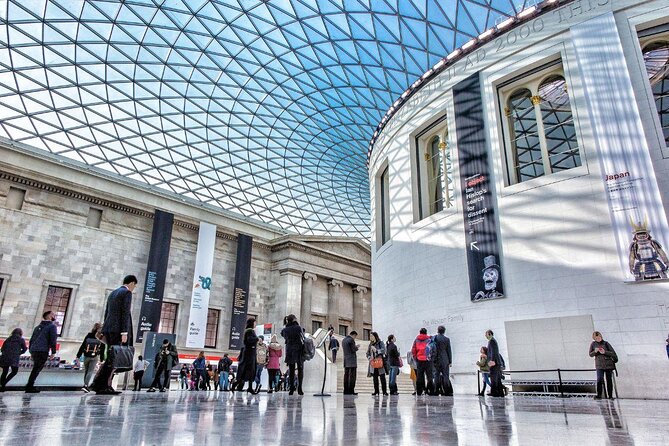
The museum setting helps, too. You’ll start on the ground floor with Assyrian, Egyptian, and Greek galleries, then move upstairs through the Roman collections and optional add-on areas depending on time and preference. And yes, folding stools are available on request at the museum, which makes a big difference if you want to take in detail without standing the whole time.
Key Highlights You’ll Want to Know Before You Go
- David’s Bible timeline: He ties artifacts to Scripture people and events, including Joseph, Moses, Jonah, Ahab, Hezekiah, Jesus, and Paul.
- Ground-floor to upstairs flow: You move logically through Assyrian, Egyptian, Greek, then Roman displays, so the story keeps moving.
- Offline-friendly study tools: A recommended Bible app works in airplane mode, plus you get extra notes in a Google Doc.
- Small group size: Maximum of 10 travelers keeps it conversational and gives you time for questions.
- Optional stops for Persia and Babylon: If you want more Old Testament-linked context, those galleries may fit in.
- Practical comfort tip: Folding stools are available at the museum if standing is tough for you.
A Bible and Archaeology Tour That Actually Feels Practical
This tour works because it refuses to treat the Bible as something floating in the abstract. Instead, it uses the British Museum’s collections like a set of visual footnotes. You look at a real object, then you get the biblical reference that helps you connect names, places, and rulers to what you’re seeing.
You get a guided route through major galleries, so you are not stuck guessing where to start. And because the group is capped at 10 people, the pace is usually calmer than a big bus tour. That matters at the British Museum, which can feel like a maze if you try to go “freestyle” on your first visit.
If you want a tour that strengthens your understanding through objects you can point to, this is a strong fit. If you want only Bible verses with no real-world context, you might feel like you’re doing more museum walking than you expected.
You can also read our reviews of more museum experiences in London



Meeting David and Getting the Timeline Straight in Your Head
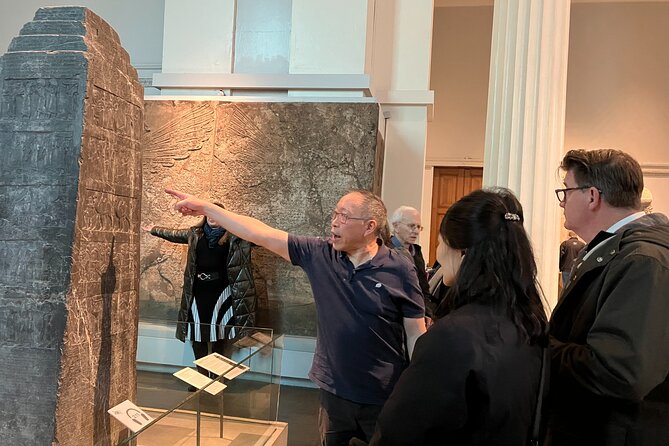
The guide here is David, and the best part is how he structures the tour so you can follow it without needing a degree in ancient history. He starts with a background framework so the Bible connections land faster when you reach each gallery.
You can expect more than a lecture style, too. David’s teaching style is animated, and he answers side questions as they come up. That can make the tour feel like you’re learning with a knowledgeable friend rather than sitting through a one-way presentation.
One useful extra: after the tour, you may receive follow-up materials by email, including references tied to specific topics discussed on-site. That gives you a next step if you want to continue your reading after you leave Bloomsbury.
Stop 1 at the British Museum: Assyrian, Egyptian, and Greek Galleries
Your first major phase takes place on the ground floor, and it’s built around a simple idea: the Old Testament and the New Testament were shaped by real empires and real political pressures.
Assyrian Rooms: Power You Can See
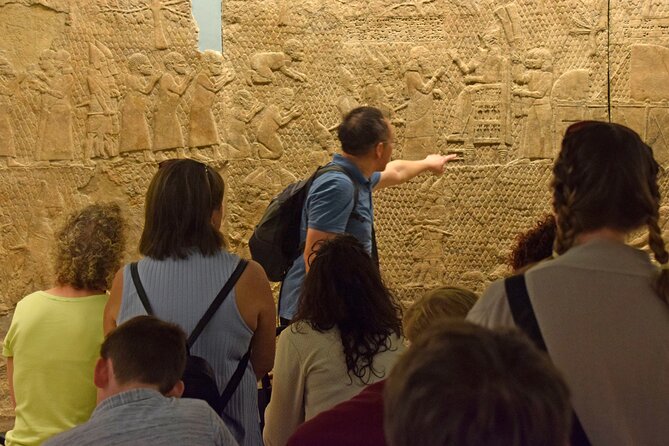
You start with the Assyrian and Egyptian displays, then move into Greek. One standout is the 40-ton Assyrian lamassu beasts. Seeing them in person does something words can’t. They are imposing, and that physical presence helps you understand how ancient empires projected authority.
This is where David’s connection to Scripture really matters. You’re not just hearing names. You’re learning how Assyria shows up in the biblical story, with figures like Jonah and other related Old Testament references used to connect events across time.
Egyptian Displays: Pharaohs and Biblical People
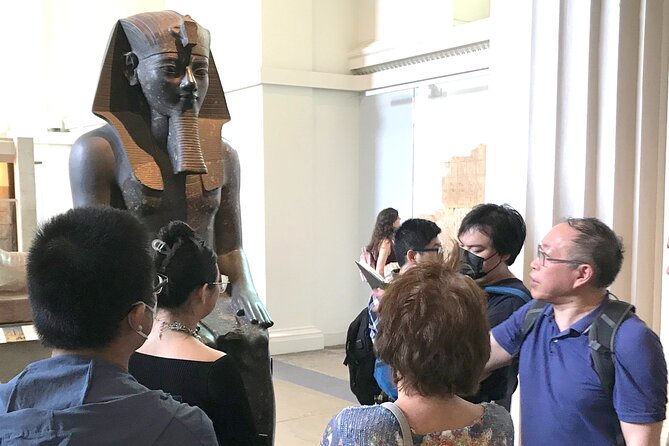
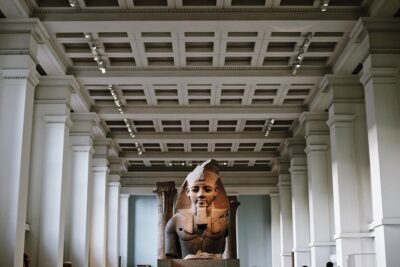
From Assyria you’ll shift to Egyptian galleries, where you’ll spend time with statues of famous pharaohs. Pharaoh-focused displays can easily become “just another ancient ruler” if you are not given context. Here, David links the Egyptian section to biblical people such as Joseph and Moses so the culture feels connected to the story you know.
If you already have a Bible reading habit, you’ll likely appreciate this more. If you only know the broad strokes, it still helps, because it gives you anchors that make later Bible reading easier.






Greek: Athens and the Parthenon Sculptures
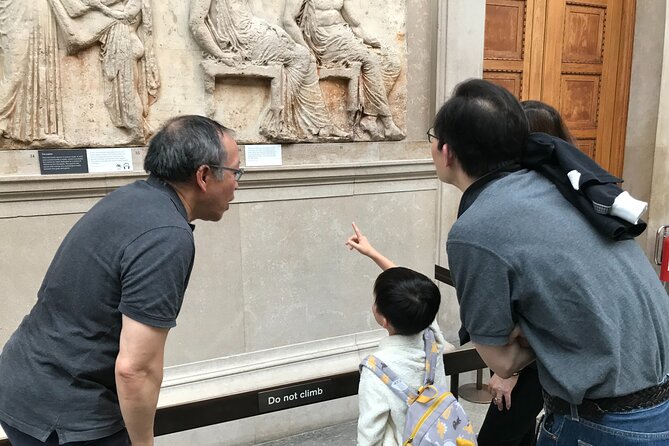
Then you move into the Greek galleries and, yes, the famous Parthenon temple sculptures of Athens are part of the early lineup. That can surprise people. The Bible is usually connected to the Middle East, so seeing Greece immediately gives you a bigger historical picture.
The Greek section also ties into New Testament context through Paul. That link is a smart move, because it helps you see how the early church traveled and communicated in a world shaped by Greek culture and learning.
The Break and the Upstairs Shift Into Roman Context
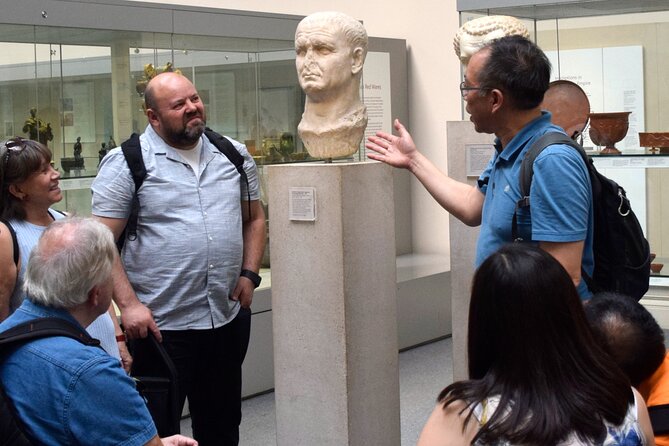
After you take a break, the tour moves upstairs into the Roman galleries. This is an excellent transition point. The museum changes vibe from one set of empires to another, and the tour uses that shift to keep your biblical timeline progressing rather than repeating the same pattern of viewing objects.
Roman galleries are especially valuable for New Testament connections. Roman rule is not background scenery in the story of Jesus and Paul. It affects law, movement, and the risk people faced.
Roman Galleries: Jesus and Paul on Real Display
You’ll look at Roman emperors and objects that connect directly to Jesus and Paul. That includes the kinds of details that are hard to imagine unless you see them in context, like how Roman authority appears in artifacts and how that authority forms the backdrop of the New Testament world.
David also connects what you’re seeing to biblical characters and themes, helping you keep the names straight. If you struggle with chronology when you read the Bible, this portion is designed to fix that by building a sequence in your head.
Optional Galleries: Persia and Babylon When Time Fits
Depending on timing and your preferences, you might also visit Persia and Babylon galleries. These can be a great add-on if you want more Old Testament-linked context, since those empires connect to major biblical experiences and historical transitions.
This is where you get flexibility. If you want more Old Testament context, lean into the optional stops. If you’re more focused on the New Testament, stick to the Roman sections and keep moving.
How the Study Notes and Offline Bible App Actually Help
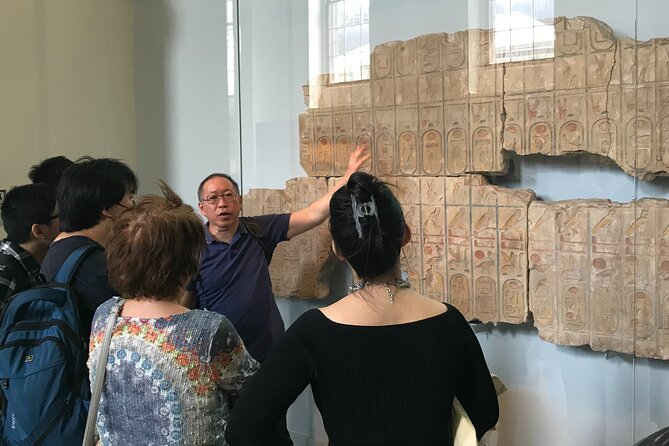
This tour is not just “watch, listen, and hope it sticks.” It comes with study support so you can do real matching between object and Scripture.
You get access to a Google Doc full of study notes and related Bible verses. That means before you even arrive at the museum, you can spend a few minutes getting oriented instead of freezing once you’re in front of glass cases.
On-site, you’re also encouraged to use a Bible app that works in airplane mode, with YouVersion suggested as a good option. The airplane mode part matters, because it helps you keep your focus on the galleries instead of hunting Wi-Fi.
Practical tip: if you plan to use the app on your phone during the tour, load anything you’ll want ahead of time. Then you can follow along quickly when David points out a passage.
Comfort and Timing: What Your Half-Day Will Feel Like
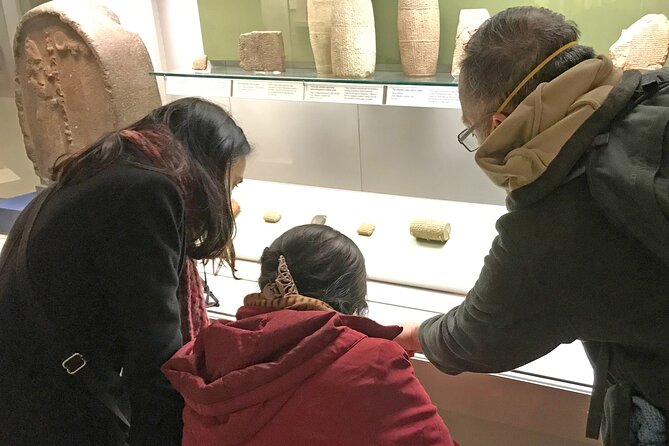
The duration is about 3 to 4 hours. In a small group, you may find the tour stretches a bit, especially if questions come up. That extra time can be a good thing, because museum learning often rewards curiosity.
Because it is a half-day style experience, you’ll get the rest of London afterward. That is a big value if your itinerary is packed. You can do this in the morning or early afternoon and still have time to wander neighborhoods, visit another museum, or just relax.
Comfort-wise, the tour is built around moving through multiple galleries. If standing all day is tough, request the folding stools available at the museum. It’s a small detail, but it changes how much you can actually enjoy the fine details.
One more timing note: it is not recommended for jet-lagged travelers who just arrived after a long haul flight. If you are tired, you will miss the connections that make this tour worthwhile.
Price of $77.50: What You’re Really Paying For
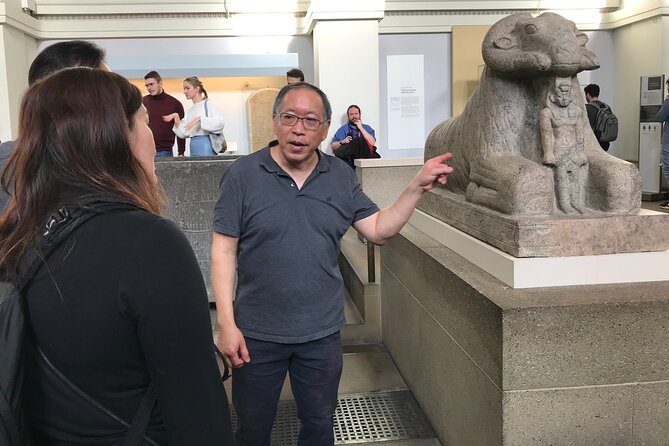
At $77.50 per person, you’re paying for more than a museum walk. You’re paying for interpretation, organization, and guidance that turns a huge collection into a focused Bible timeline.
Admission is listed as free for this activity. That matters because your money is mostly going to the human part: David’s route planning, on-site explanations, and the study materials that support what you see.
You’re also paying for small-group dynamics. A maximum of 10 travelers means you are less likely to feel lost in the crowd. And because David answers questions and adjusts his flow, you get a more personal learning experience than a generic museum audio guide.
If your alternative is wandering the British Museum without a plan, this price can feel like a bargain. If your alternative is already having a strong plan for the British Museum and you prefer self-guided study, then it might feel pricey. The deciding factor is whether you want your Bible reading and ancient history to connect in real time.
Who This Tour Is Best For (And Who Might Skip It)
This experience is perfect if you are interested in the Bible plus ancient history, and you want to see how Scripture connects to the world of empires. It also suits you if you like structured learning, because David maps out a timeline that ties together Old Testament and New Testament threads.
It can be a good family option, especially for older teens and kids who can handle a few hours of museum walking and reading apps. It is also a solid fit if you have been away from Bible study for a while, because the tour uses objects and names as anchors, which helps you restart without feeling lost.
You might want to skip or choose a different style of visit if:
- you are very jet-lagged
- you dislike structured guided routes
- you want zero Bible discussion and only art viewing
Final Verdict: Should You Book Explore Biblical Artifacts?
If you want the British Museum to make sense through a Bible timeline, this tour is an easy yes. The structure is clear, the connections are specific, and David’s approach makes it practical to follow along. The study notes plus offline Bible app support also help you learn rather than just watch.
Book it if you like the idea of seeing ancient artifacts as context for Scripture, and you want a small-group guide to keep you oriented. Pass if you’re only interested in art history with no Bible angle, or if you are too tired to engage for 3 to 4 hours.
If you do book, do yourself a favor and prep your Bible app before you arrive. Then you can spend your attention on the objects, not on your phone battery.
FAQ
How long is the Explore Biblical Artifacts tour?
It runs about 3 to 4 hours.
What does the tour cost?
The price is $77.50 per person.
Is British Museum admission included?
The activity includes an admission ticket marked as free.
What galleries and areas does the tour cover?
You start on the ground floor with Assyrian, Egyptian, and Greek galleries, then go upstairs to the Roman galleries. Optional galleries include Persia and Babylon if time allows.
Is there a maximum group size?
Yes. The tour has a maximum of 10 travelers.
What language is the tour offered in?
The tour is offered in English.
Is there any help for comfort during the tour?
Yes, optional folding stools are available at the museum if you want them.
Where does the tour meet?
The meeting point is the British Museum, Great Russell St, London WC1B 3DG, UK.
Can I get a refund if plans change?
Yes, free cancellation is available up to 24 hours in advance for a full refund.
More Museum Experiences in London


More Tour Reviews in London
Not for you? Here's more nearby things to do in London we have reviewed









More British Museum Tours worth a look.
 ★ 4.3British Museum Guided TourTickets from $231,182 guest reviews
 ★ 5.0British Museum London Guided Tour Semi-Private 8ppl MaxTickets from $108984 guest reviews
 ★ 4.1Tour of the British MuseumTickets from $14678 guest reviews
 ★ 4.5British Museum Audio Tour & Priority Entrance TicketTickets from $9631 guest reviews
 ★ 5.0The British Museum London – Exclusive Guided Museum TourTickets from $108555 guest reviews
 ★ 4.2Afternoon Tea at the British MuseumTickets from $58511 guest reviews
 ★ 4.0British Museum Guided TourTickets from $18470 guest reviews
★ 4.5British Museum Guided TourTickets from $39267 guest reviews
★ 4.0British Museum Guided TourTickets from $18470 guest reviews
★ 4.5British Museum Guided TourTickets from $39267 guest reviews
Continue by place or experience