
REVIEW · BRITISH MUSEUM TOURS
British Museum Tour: Rosetta Stone, Parthenon, Mummies
The British Museum teaches fast, in two hours. I like how this guided format keeps you focused on a few unforgettable stops, including the Rosetta Stone and the mummy galleries. I also love how the visit gives real context, not just a walk past famous objects, with the Great Court glass roof as your early orientation moment. One possible drawback: the museum is busy, and the guide can be soft spoken, so you will want to stay close if you care about hearing every detail.
At $84.69 per person, you are paying for time savings and interpretation. You get a live English guide and a clear route through a museum that otherwise can swallow an entire day.
This tour is on foot and not private. So it is best if you want a smart highlight run through major collections, not if you want to linger for hours in one gallery.
Key things I’d circle before you go
- Rosetta Stone, explained with purpose so you understand why it matters to deciphering Egyptian hieroglyphics
- Parthenon sculptures with the Lord Elgin story behind why these pieces are in London
- Egyptian mummies and burial artifacts that connect craftsmanship to beliefs
- More than objects, a museum-history angle including how exhibits got there
- Great Court glass roof as a quick orientation win before you start moving
- Two bonus hits Sutton Hoo treasures and the Winged Bulls from Khorsabad
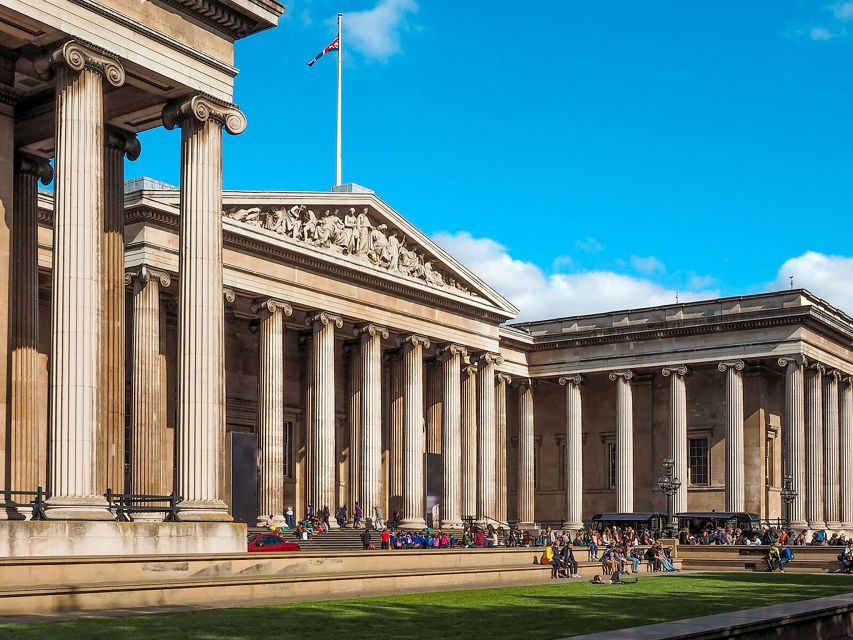
Entering the British Museum by the Main Entrance and Great Court
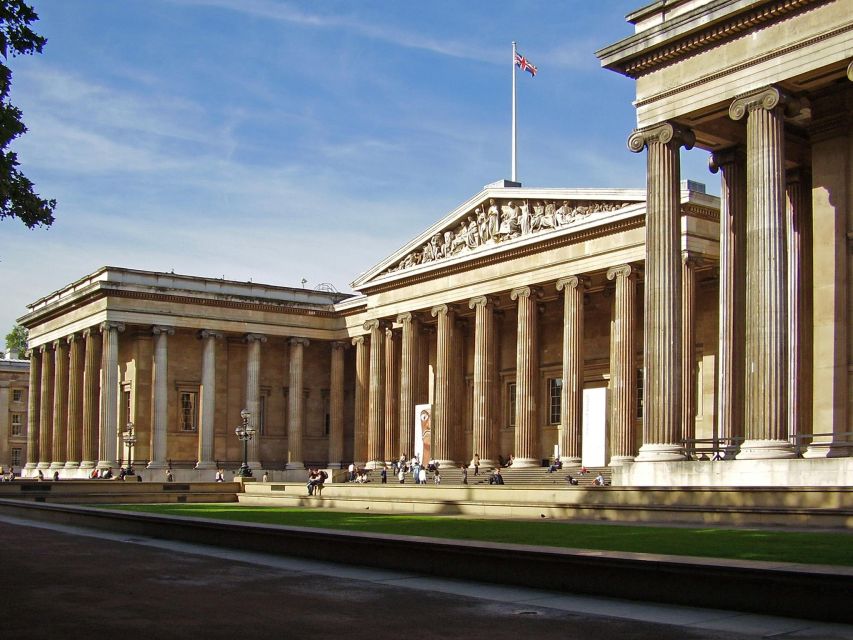
Your tour starts where most people get turned around. You meet your guide on the stairs at the main entrance, after you clear security. Do yourself a favor and arrive at least 15 minutes early, because in a big museum, that time buys you breathing room.
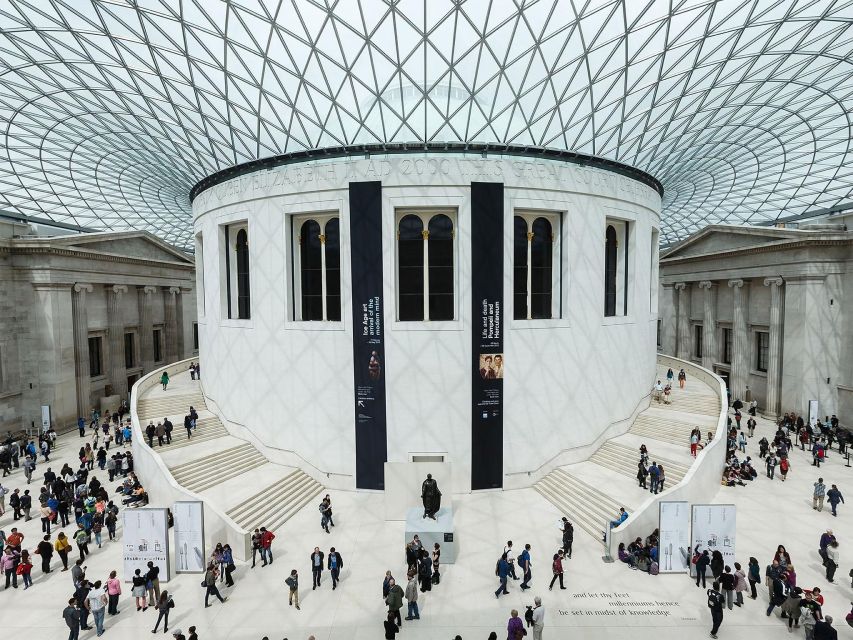
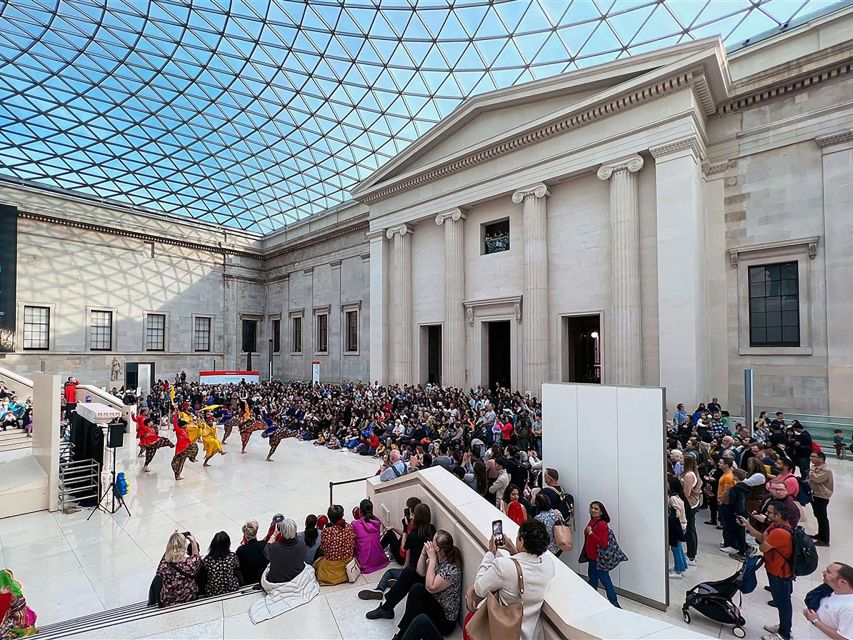
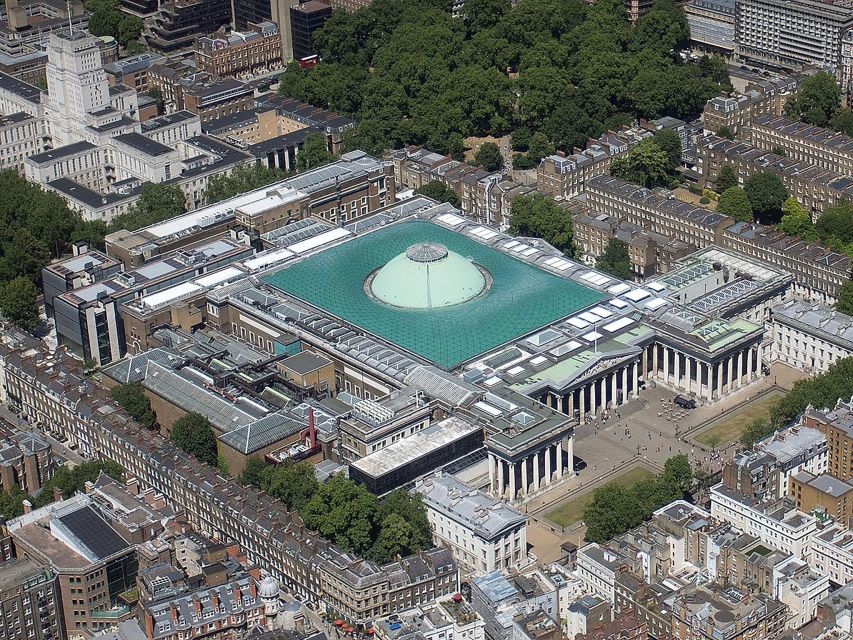
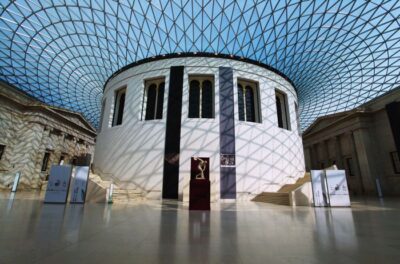
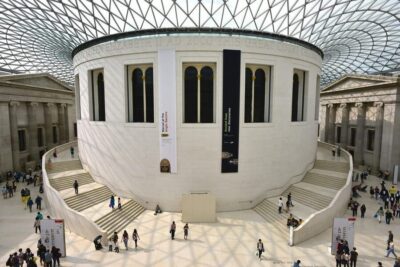
Once you are in, you start with architecture before archaeology. The Great Court’s glass roof is the kind of scene that makes you pause, even if you came for artifacts. It also does something practical: it helps you get your bearings in the museum’s maze-like layout. After that, the guide moves you into a small set of major rooms so you do not waste energy trying to figure out where to go next.
One reason I like this setup is simple. The British Museum is huge. Even if you are motivated, going solo can turn into aimless walking and frustration. A guided route here is less about speed and more about staying focused on what the tour can actually cover in two hours.
You can also read our reviews of more museum experiences in London



Rosetta Stone: the stop that frames everything else
The Rosetta Stone is the headline for a reason. Your guide brings you to one of the most famous objects in the museum, and explains why it is key to deciphering Egyptian hieroglyphics. Even if you know the basics, seeing it in the museum context tends to make it feel more concrete and less like a textbook idea.
What I like about this stop is the way it acts as a reference point. Once you understand why the Rosetta Stone is important, the rest of the Egyptian galleries make more sense. You are not just looking at carved symbols. You are thinking about language, interpretation, and how people in the modern world learned to read the ancient world.
This is also where a guide really earns their fee. The tour is built around a tight sequence of objects, so the commentary matters. In the reviews, people praised how the guide connected background, including myth and story elements tied to prehistory and antiquity, not just dates.
Practical tip: when you reach this kind of “popular wall,” position yourself early and stay ready. If the group shifts or people crowd in, you may lose sight or struggle to hear. The museum is busy, and sound can bounce around.
Parthenon sculptures: beauty plus the controversy story
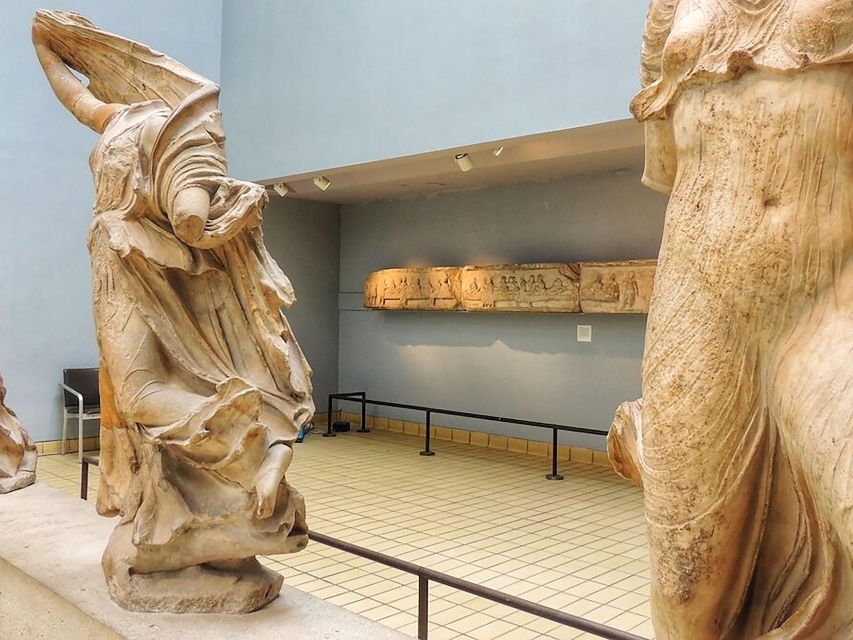
Next comes the Parthenon sculptures, and yes, the argument matters. These sculptures are described as controversial history, because of how they ended up in Britain. Your guide covers the story of how Lord Elgin, the British ambassador to the Ottoman Empire, removed them from the Parthenon in Athens and brought them to the British Museum.
You get the best experience here if you treat the stop as two layers. First, there is the visual impact. The sculptures are striking pieces of art. Second, there is the cultural and political backstory. The tour makes sure you do not just admire marble. You understand that museum collecting has consequences, and those consequences still shape public debate today.
I appreciate that the tour does not act like the story is a footnote. It frames the sculptures as objects caught in power, geography, and changing eras. That turns your viewing time into something more reflective, instead of a quick photo-and-quit moment.
This stop is also a reminder that the British Museum is not only about ancient worlds. It is also about later history, including how European collecting practices reshaped what people could see in one place.
Egyptian mummies and burial artifacts, seen with fewer gaps

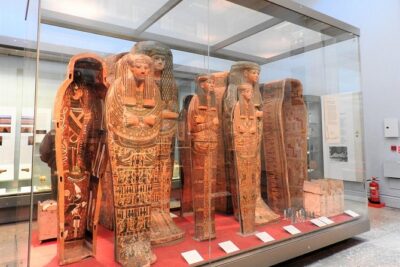
The mummy galleries are where the tone shifts. Instead of focusing on writing or marble, you see ancient Egypt through the lens of burial and the objects placed with the dead. On this tour, you explore Egyptian mummies and burial artifacts, with your guide explaining what the exhibits show about elaborate burial practices and everyday life.
I like the balance here: you are not only staring at preserved bodies. You are getting the context that burial is about beliefs, craft, and preparation. The guide ties together spiritual ideas and the level of detail you can see in the artifacts.
Because the tour is only two hours, you do not get the luxury of long museum wandering. But that is exactly why the guided approach works. You get a focused selection of Egyptian highlights, so you leave with clearer impressions instead of a blurry list of rooms you visited.
The main thing to watch is pacing. Even on a short tour, you will walk a lot inside a museum with lots of stairs and turns. Wear shoes you trust. If your feet are hurting, it is hard to absorb the commentary your guide is providing.
Sutton Hoo treasures and Khorsabad winged bulls
After the Egyptian galleries, the route widens beyond one civilization. You then visit treasures from Sutton Hoo, an Anglo-Saxon burial site known for rich burial finds. This stop is valuable because it reminds you that the British Museum is also a place to understand Britain’s early medieval world.
From there, the tour ends with a strong ancient art visual: the Winged Bulls from Khorsabad. These imposing sculptures once guarded a grand palace, so even before your guide explains more, you can feel their designed power. Your guide highlights their size and detail, connecting them to ancient Mesopotamian art and architecture and to Assyrian civilization.
I like these two stops together because they show the museum’s big idea. It is not one museum of one region. It is a collection of many worlds, stacked under one roof. In a short tour, you get a taste of that range without losing your mind.
If you care about how scale changes how you perceive history, this pairing does the job. Mummies and burial craft pull you close. Winged guardians pull your eyes up and back, because the forms are monumental.





The guide’s style, group reality, and how to hear them
You are not on a private tour. The experience is set up as a group walk with a live English guide. In a museum like this, that changes everything about comfort and listening.
Two practical lessons show up in real experiences. First, a focused area helps you avoid overwhelm. One review nailed that point, saying it was the right choice because attempting more would have been overwhelming. In other words, this tour’s structure is meant for humans with limited attention spans, not superhuman marathon museum plans.
Second, listening can be tricky. The museum is busy, and one guide was described as soft spoken, making it harder to hear at times. So here is what you should do: position yourself near the front of the group when you enter a gallery. If the group shifts or you end up near the back, try to move up during the transition moments.
Also, manage expectations. Two hours is short, so your guide may give a lot of information fast. If you are the kind of person who likes to take notes, bring a small notebook or use your phone notes app. You will thank yourself after when the objects start blending together in your memory.
Price and value for an $84.69, 2-hour museum sprint
Let’s talk value, because $84.69 per person is not pocket change, even in a great city.
Here is what you are paying for, based on the tour details you get:
- A live English guide who can explain why each object matters
- A structured route so you do not waste time deciding where to go in a huge museum
- Context that connects objects to bigger themes, including how exhibits got to the museum
If you have ever tried to plan a British Museum visit alone, you already know the hidden cost: mental energy and time. A guided sprint converts your money into focus. For the price, you are buying fewer decisions, better story flow, and a way to make sense of world-famous objects quickly.
Could you do this cheaper by going solo? Probably, but you would have to supply your own interpretation. With this tour, the guide does that work for you, and that is especially worth it when the route includes complicated material like the Parthenon sculptures and why they are in London.
Overall, I see this as a good value if your priority is highlights plus meaning, not quiet browsing.
Who this tour fits best (and who should rethink it)
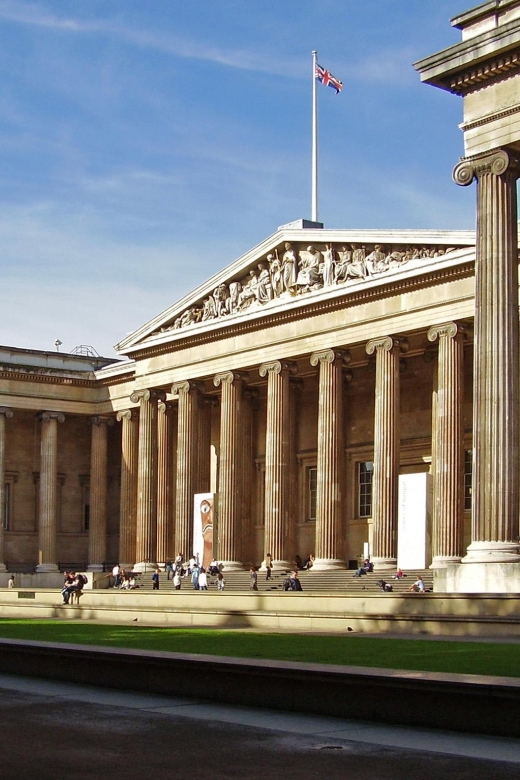
This British Museum tour makes the most sense if you:
- Want a two-hour, on-foot highlights plan with a licensed guide
- Like learning context as you see major objects, rather than reading labels all on your own
- Prefer a focused route that avoids museum overwhelm
- Are comfortable walking and standing in busy galleries
It may be less ideal if you:
- Need wheelchair-friendly routing, because the tour is not suitable for wheelchair users
- Want a slow pace with long stops at only one gallery
- Plan to rely on hearing every word from far back, since the guide may be soft spoken and the museum can be noisy
One more practical note: you will be asked for passport or ID. Bring it. Security checks are part of the reality here, and it is better to have what you need than to scramble.
Also, the tour is provided by Move Venezia, and you get online support at the time of boarding the tour. That can be helpful if you have questions right before you meet up.
Should you book the British Museum Rosetta Stone, Parthenon, Mummies tour?
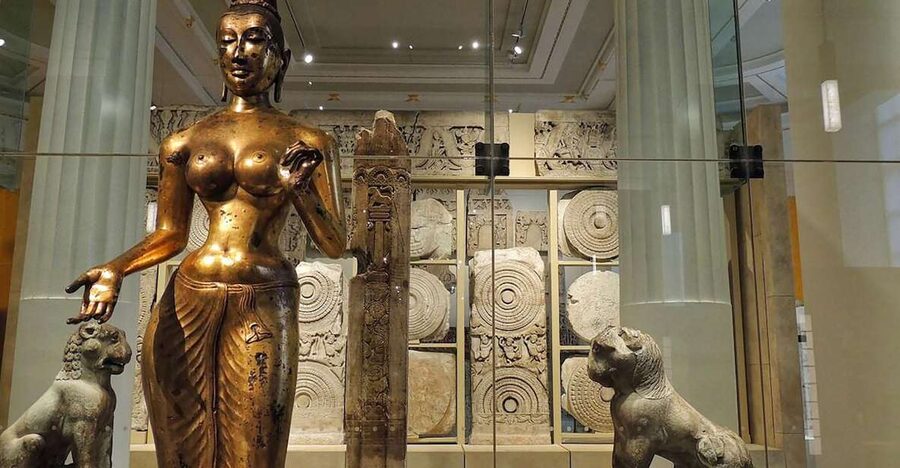
I’d book it if you want a guided hit that connects the museum’s biggest headline objects to the stories behind them. In two hours, you get a lot of intellectual payoff: deciphering Egyptian hieroglyphics through the Rosetta Stone, a controversy story tied to the Parthenon sculptures and Lord Elgin, then mummies and burial artifacts with beliefs and everyday life in the mix. You also come away with extra stops that widen the view with Sutton Hoo and the Winged Bulls from Khorsabad.
Skip it if you need full accessibility for wheelchair users, or if you are the type who wants to spend half a day in one room with no group pace at all. This tour is designed for focus, not for drifting.
If you choose it, do the smart things: arrive early, wear comfortable shoes, and get near the front so you can actually hear your guide. You will leave with clearer impressions, not just a list of famous objects.
FAQ
How long is the British Museum tour?
It lasts 2 hours.
Where do I meet the guide?
Meet your guide on the stairs at the main entrance of the British Museum, after security checks.
What should I bring with me?
Bring a passport or an ID card.
Does the tour include hotel pickup?
No, pick up from hotel is not included.
Are food and drinks included?
No, food and drinks are not included.
Is the tour private?
No, it is not private.
Is it suitable for wheelchair users?
No, the tour is not suitable for wheelchair users.
What if the time slot I choose is not available?
If your selected time is not available, you will be transferred to another time on the same day. The example given is that if you pick 10:00 and it is not available, you may be moved to the first available slot, such as 14:00.
More Museum Experiences in London


More Tours in London

More Tour Reviews in London
Not for you? Here's more nearby things to do in London we have reviewed








More British Museum Tours worth a look.
 ★ 4.3British Museum Guided TourTickets from $231,182 guest reviews
 ★ 5.0British Museum London Guided Tour Semi-Private 8ppl MaxTickets from $108984 guest reviews
 ★ 4.1Tour of the British MuseumTickets from $14678 guest reviews
 ★ 4.5British Museum Audio Tour & Priority Entrance TicketTickets from $9631 guest reviews
 ★ 5.0The British Museum London – Exclusive Guided Museum TourTickets from $108555 guest reviews
 ★ 4.2Afternoon Tea at the British MuseumTickets from $58511 guest reviews
 ★ 4.0British Museum Guided TourTickets from $18470 guest reviews
★ 4.5British Museum Guided TourTickets from $39267 guest reviews
★ 4.0British Museum Guided TourTickets from $18470 guest reviews
★ 4.5British Museum Guided TourTickets from $39267 guest reviews
Continue by place or experience