
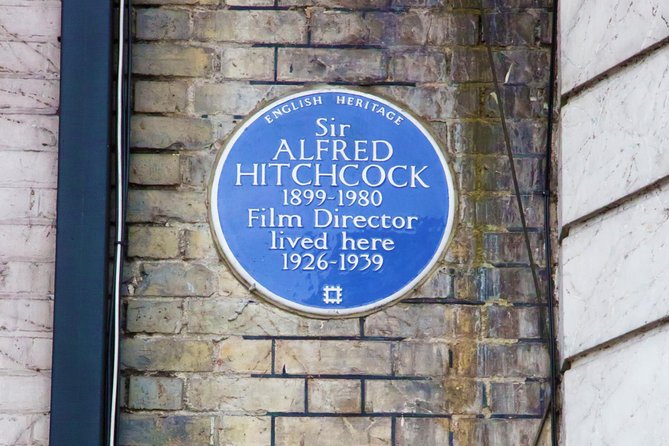
REVIEW · LONDON CITY TOURS
The Alfred Hitchcock London Walk with Sandra Shevey
One sentence can change how you see a city. This Alfred Hitchcock London Walk with Sandra Shevey turns London streets into clues, with a film historian leading the way and rare interview sound bites adding context as you go. I like that it helps you spot what most visitors miss, not just the famous postcard stops, and it connects locations to three classic films.
Two things I really like are the focus on buildings as story (Hitchcock’s own idea that the real stars are the places on screen) and Sandra Shevey’s background as an international film historian who actually interviewed Alfred Hitchcock in 1972. A possible drawback to note is that this is a walking-focused experience with a moderate fitness level requirement, and you will also want to plan for weather since no food or drinks are included.
If you’re a Hitchcock fan, film nerd, or architecture spotter who enjoys learning through real places, this tour is a strong match. If you want a low-effort sit-down activity or you need a lot of built-in downtime, you might find it a bit fast and hands-on.
Key things that make this Hitchcock walk worth your time
- Sandra Shevey’s 1972 interview audio: sound bites from Hitchcock’s rare 3-hour one-on-one interview bring the ideas to life.
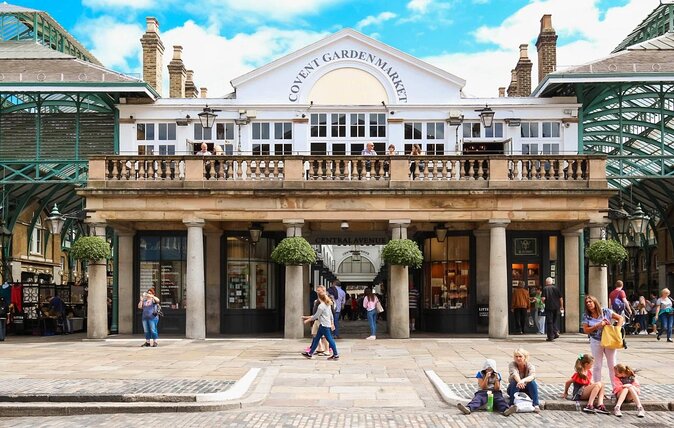
- Three classic film lenses: you’ll connect Covent Garden landmarks to The Man Who Knew Too Much (1956), Frenzy, and The Paradine Case.
- A small group cap: maximum 20 travelers means more room for questions and a more conversational pace.
- Architecture-first storytelling: the route encourages you to notice facades, streets, and built detail, not just plaques.
- Set design tie-in with Henry Bumstead: included set art courtesy of the Oscar-winning designer gives you an extra way to visualize scenes.
Hitchcock’s London, taught through buildings you can actually see
This walk is built on a simple idea: Hitchcock didn’t treat London like a background. He treated it like a character. You’ll get nudged to look at street geometry, building edges, entrances, and facades as potential scene partners, not just scenery. That matters because once you start reading the city that way, the films feel less like distant classics and more like maps.
Sandra Shevey’s guide style is also a fit for how a walk works. Instead of tossing facts at you, she uses the places around you as prompts, so your brain stays on the move. The result is that you tend to leave with sharper movie recall, because you connected specific visual elements to real London structures.
One more plus: this tour is designed to help you get off the standard checklist. Even if you know London well, you’ll likely be shown spots tied to films that most people never think to link to Hitchcock.
You can also read our reviews of more walking tours in London

Meet Sandra Shevey, and why the 1972 interview audio changes everything
The guide is Sandra Shevey, an international film historian, biographer, lecturer, and academic. That’s not just a resume line. It matters because she’s connected to the tour’s core teaching tool: rare 1972 interview material.
She’s included as the guide who interviewed Alfred Hitchcock in 1972 in one of his last 1-2-1 interviews, lasting 3 hours. On this tour you get sound bites from that interview, plus context that connects Hitchcock’s own thinking to what you’re seeing in London right now. If you’ve ever wondered why Hitchcock’s camera obsession with place feels so precise, this format gives you clues directly from the man’s recorded words.
She also uses set art courtesy of Oscar-winning Alfred Hitchcock designer Henry Bumstead. That’s a subtle but smart inclusion. Film fans often focus on what’s in the frame, but set design helps explain how the frame was shaped. Even if you are not a deep-studies person, the art gives your imagination somewhere to land.
If you are worried this will turn into a lecture, it likely won’t, because the audio and set context are meant to accompany the walk. It gives you a reason to look up, stop, and notice again.
The route from Bayswater Queensway to Covent Garden: what the pacing feels like
The tour starts at Bayswater Queensway, London W2 4RH, and it ends in Covent Garden, London. The start time is 11:00 am, and the whole experience runs about 3 hours.
A small group max of 20 matters here. Walking tours can feel crowded fast, but the limit helps keep things clear when you stop to look at details. It also supports the kind of Q and A rhythm the guide wants. The info also notes that Sandra likes to connect, answer questions, and make sure you understand the meeting place, which is a big deal if you’re meeting in a busy area.
You’ll want to treat this like a real walking event. The guidance suggests moderate physical fitness and includes advice to bring comfy shoes. I think that’s the right expectation to set, because the tour’s value comes from noticing things at street level, not rushing through in a blur.
Also plan for the practical stuff:
- Bring bottled water.
- Bring an umbrella, since London weather can be unpredictable.
- Expect weather to matter because food and drinks are not included.
Covent Garden through three Hitchcock films: how to “read” the scenes
The tour’s anchor stop is Covent Garden. In the time you spend there, you’ll focus on locations associated with three classic films: The Man Who Knew Too Much (1956), Frenzy, and The Paradine Case.
Covent Garden is a smart choice for this kind of tour because it has layers. It’s a place with familiar tourist energy, but it also has architectural and market-area details that support suspense and staging. The itinerary highlights Covent Garden Market among the covered film-related locations, plus other monuments and landmarks around London that appear in these films.
Here’s the practical way to get the most out of this stop. When you arrive, I’d stop trying to memorize. Instead, pick 2 or 3 visual anchors and let them connect to the films you care about. For example:
- Look at entrances and street corners that could frame a character’s path.
- Notice how buildings define the space, especially where open areas meet narrower streets.
- Watch for how the market area changes the feeling of scale and movement.
The tour also leans into Hitchcock’s own idea that buildings are the real stars. When you connect that idea to what’s in front of you, you start seeing why the city can feel tense and intentional on screen.
The Covent Garden portion is listed at 30 minutes, which helps you set expectations. That short window means you’ll likely move between several viewpoints. Don’t worry if you don’t catch every detail. The goal is to leave with a stronger way to watch Hitchcock, not to collect every address.
How the multimedia interview sound bites keep the story grounded
One of the most compelling parts of the experience is the multimedia component: sound bites from the rare 1972 3-hour interview, shared as you walk. This is valuable because it adds texture to the film connections.
Instead of just being told what Hitchcock thought, you get fragments of his recorded voice or interview content that you can then tie to the street around you. That turns a typical location walk into something closer to a guided conversation with the filmmaking mind behind the work.
This approach also helps with attention. When you’re outside, your brain is constantly scanning. Audio clips give you a reason for why that scanning matters, and they make the learning feel more like pattern recognition than trivia collection.
If you’re a Hitchcock fan, you may also notice how often filmmakers use place as a mood machine. This tour nudges you to see that Hitchcock’s choices were not accidental. They were structural, visual, and rooted in the physical world.

What’s included, what’s not, and how to pack smart
Here’s what’s included:
- Guide Sandra Shevey, an international film historian who interviewed Hitchcock in 1972.
- Sound bites from rare 1972 3-hour interview material.
- Set art courtesy of Henry Bumstead, Hitchcock’s Oscar-winning designer.
- Locations tied to three classic films.
Not included:
- Food and drinks
- Tips
- Transport to and from attractions
The “bring bottled water, an umbrella, and wear comfy shoes” advice is practical and worth taking seriously. Since you’re outside for much of a 3-hour window, those items are basic comfort tools, not optional extras.
One extra value note that’s easy to miss: there’s an Alfred Hitchcock Signature product associated with Sandra Shevey, and booking the tour comes with a 10% discount for that item. If you’re a collector or you like taking learning home in a tangible way, that can make the overall package feel more worthwhile.
Price and value: is $240.86 for 3 hours a good deal?
At $240.86 per person for about 3 hours, this is not a budget stroll. But the pricing makes more sense when you look at what’s actually included.
You are paying for:
- A named, specialist guide (Sandra Shevey) with a direct Hitchcock interview connection.
- Access to rare interview content in sound-bite form.
- Multimedia teaching tied to three specific classic films.
- Additional visual context via set art courtesy of Henry Bumstead.
- A small group cap of up to 20 people, which usually improves the quality of a walking tour experience.
For many walking tours, the “value” is mainly the guide’s storytelling plus a few map stops. Here, the value is stacked. The interview material and set design connection give you more than a generic sightseeing narrative. And because it is limited to a moderate walking format, you are getting focused time on a theme, not a big broad city tour.
If you are the kind of traveler who enjoys expert context and wants your movie viewing to come with stronger place awareness, you’ll likely feel this price is fair. If you’re just casually curious about Hitchcock, a less specialized tour might feel cheaper per hour.
Also, plan ahead. The tour is booked on average 23 days in advance. That’s a hint the dates can fill, especially if you’re traveling during peak periods.
Who should book this Hitchcock London Walk, and who might skip it
This tour is ideal for:
- Film buffs and Hitchcock fans who want to connect scenes to real London places.
- People who enjoy architecture and street-level detail.
- Travelers who like expert-led storytelling that uses multimedia context, not just a guide talking over the noise.
It may be less ideal for:
- Anyone who dislikes walking or needs lots of sit-down time. The guidance calls for moderate physical fitness.
- People who want food handled for them, since food and drinks are not included.
- Travelers who want a purely “see the main sights” itinerary. This one is intentionally about the spots most visitors overlook.
A nice bonus for practical travelers: service animals are allowed, and the tour is near public transportation. That makes it easier to fit into a London schedule without complicated transfers.
Should you book this Alfred Hitchcock London Walk?
I’d book it if you want your London trip to feel more like film study with fresh air. The combination of Sandra Shevey’s film historian perspective, the rare 1972 Hitchcock interview sound bites, and the set design connection makes this a stronger experience than an average themed stroll. Add the small group limit and the architecture-first approach, and you get a tour that can actually change how you watch Hitchcock after the walk ends.
I’d think twice if you’re on a tight budget, or if you want a relaxed, low-movement sightseeing option. It’s designed for people who enjoy noticing details outdoors and who are happy to bring water, shoes, and weather-ready planning.
If you fall into the first group, this is the kind of tour that makes a city feel personal, and it does it with film context grounded in the real streets of London.
FAQ
How long is the Alfred Hitchcock London Walk with Sandra Shevey?
The tour lasts about 3 hours.
What is the meeting point and where does it end?
You start at Bayswater Queensway, London W2 4RH, UK, and the tour ends in Covent Garden, London.
What time does the tour start?
The start time is 11:00 am.
Is the tour offered in English?
Yes, the tour is offered in English.
What is included in the price?
The price includes the guide (Sandra Shevey), sound bites from rare 1972 3-hour interview footage, set art courtesy of Henry Bumstead, and locations connected to three classic Hitchcock films.
What should I bring with me?
It is advised to bring bottled water, an umbrella, and wear comfortable shoes.
How large is the group?
The tour has a maximum of 20 travelers.
Is it easy to reach by public transportation, and are service animals allowed?
The tour is near public transportation, and service animals are allowed.
Can I change or cancel after booking?
No. The experience is non-refundable and cannot be changed for any reason.
More Walking Tours in London
More Tour Reviews in London
Not for you? Here's more nearby things to do in London we have reviewed



More London City Tours worth a look.
 ★ 4.6The London Eye Entry TicketTickets from $3935,875 guest reviews
 ★ 4.7From London: Harry Potter Warner Bros Studio TourTickets from $11726,588 guest reviews
Westminster to Greenwich River Thames CruiseTickets from $2222,836 guest reviews
Magical London: Harry Potter Guided Walking TourTickets from $2022,044 guest reviews
★ 4.7From London: Harry Potter Warner Bros Studio TourTickets from $11726,588 guest reviews
Westminster to Greenwich River Thames CruiseTickets from $2222,836 guest reviews
Magical London: Harry Potter Guided Walking TourTickets from $2022,044 guest reviews
 ★ 4.6Madame Tussauds LondonTickets from $3620,915 guest reviews
 ★ 4.5Stonehenge, Windsor Castle, and Bath from LondonTickets from $11118,662 guest reviews
 ★ 4.7Warner Bros. Studio Tour with TransfersTickets from $14417,586 guest reviews
 ★ 4.7Tower Bridge Entry TicketTickets from $2115,560 guest reviews