
REVIEW · LONDON CITY TOURS
Secret Societies, Freemasons and Occult London
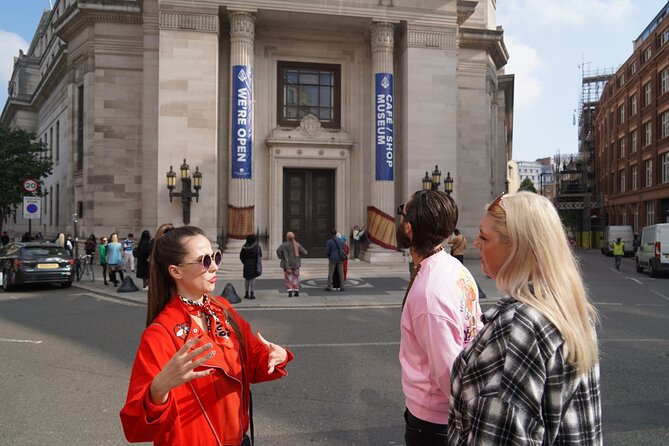
Dark London stories run through the streets like hidden wires. This private walking tour threads Freemasons and occult lore into famous landmarks you think you know. You get a guide who ties each stop to names, orders, and grim episodes most tours skip.
I especially liked the tour’s focus on specific secret societies, from the Hermetic order of the Golden Dawn to Ordo Templi Orientus and Aleister Crowley. I also like that you spend your time learning street-level stories tied to places like St. James’s Palace, Pall Mall, and Cleopatra’s Needle, not just posing for photos. With a private format, it stays tuned to your group’s pace and interests.
One consideration: you’ll do a lot of walking for a short total time, and a couple of stops can feel a bit brief if you want deep detail on every single site. If you’re very specific about which occult orders or figures you want to study, you may want to ask your guide how much time they plan to spend on each topic before you start.
Key points to know before you go
- Private walking tour for your party, so the guide can shape the pace
- St. James’s Palace to Pall Mall stops tied to magical arts and 19th-century secret circles
- Golden Dawn and Aleister Crowley connections you can actually place on a real map
- Cleopatra’s Needle and Egyptian influence on British occult symbolism
- A walking route through Bloomsbury and the British Museum area that explains why the objects matter
- Not for the faint of heart, since the subject matter leans dark and spooky
Price and what you actually get in 3 hours
At $2,314.24 per person for about 3 hours, this is not a casual add-on. The cost makes sense if you value a private guide and a highly focused theme, because you’re paying for storytelling that connects multiple occult threads to real London corners.
The good news is that the tour notes list admission ticket free at the timed stops. That usually means you are not paying extra entry fees to enjoy the experience, since much of it is walking, looking, and listening around landmarks like St. James’s Palace, Trafalgar Square, and museum exteriors.
What you’re buying is attention, not attractions. If you want a lineup of ticketed sights, you’ll likely feel this is too story-driven. If you enjoy walking and listening to real-world legends, you’ll probably feel like you got your money’s worth.
You can also read our reviews of more tours and experiences in London.
Meeting at St. James’s Palace, then walking the occult spine of London
The tour starts at St. James’s Palace, near Marlborough Road (SW1A 1BQ). It ends around Tottenham Court Road (the tour listing shows the endpoint there), so plan on being comfortable with a neighborhood walk rather than a loop back to the exact start.
Before you go, I’d set expectations: this isn’t a “quick hit” history lesson. It’s a guided route that treats London’s landmarks like clues. The vibe is meant to be dark, and your guide’s job is to connect that mood to names and groups, not just atmosphere.
If you have moderate physical fitness, you should be fine. You’ll move through central London on foot across several areas, including Pall Mall, Trafalgar Square, Covent Garden, and Bloomsbury. Bring layers, because weather can change fast in London.
St. James’s Palace to Pall Mall: magic arts, then the grim societies
This first stretch is the heart of the tour because it sets the theme with heavy-hitting names and institutions. You begin at St. James’s Palace, one of London’s oldest royal palaces, then shift into the idea of a “temple” devoted to the study of magical arts. Even if you’re not a student of occult history, this framing helps you understand the tour’s logic: the official capital and the secret world are close neighbors on the same map.
From there, your guide points out where, in the 19th century, the darkest society called the Suicide Circle operated. That’s the moment where the tour’s warning makes sense. The tone turns serious, and the stories lean toward the frightening rather than the playful.
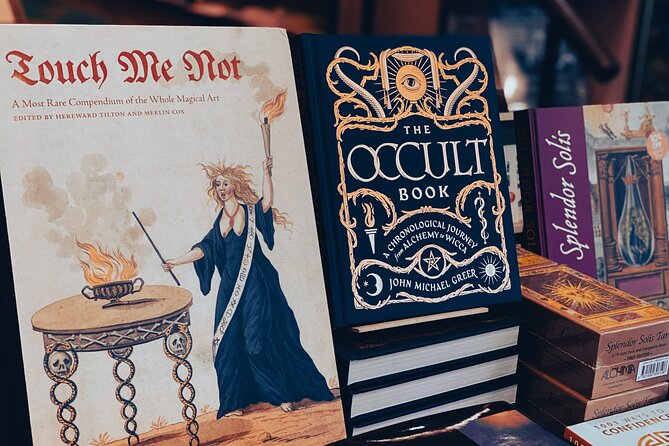
Then you walk Pall Mall before reaching an older occult bookshop in London. This is one of those stops that works well even if you’re not buying anything. Seeing where people went to read and collect occult ideas makes the history feel less abstract.
Golden Dawn and the streets that name them
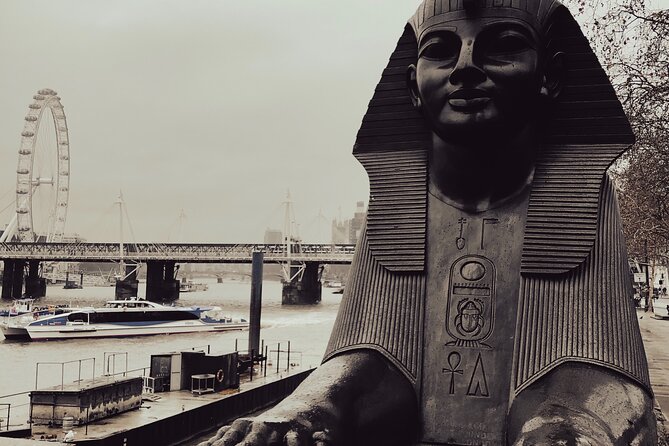
Next comes the Hermetic order of the Golden Dawn, including stories about members tied to that tradition. If you like when a tour gives you place names you can repeat later, this is where it helps.
The Golden Dawn connection is useful because it gives you a structure for the tour’s bigger pattern: occult groups weren’t only rumors. They had meetings, publications, members, and recognizable people. Your guide helps you connect that to what you can spot on the ground, not just what you might find in a book.
I also like that the tour namechecks well-known occult figures and then anchors them in London. That means you can stop thinking of the topic as mythology and start treating it like a documented subculture with real addresses and landmarks.
Charing Cross Hotel and Eliphas Levi’s famed act

As you walk onward, you reach the Charing Cross Hotel, linked here to the French occultist Eliphas Levi, including a story about an act of necromancy. This stop is less about architecture and more about symbolism: your guide uses Levi to explain how European occult ideas traveled into London’s imagination.
This part can be intense. If you’re squeamish about death-related themes, the tour’s “not for the faint of heart” warning is worth taking seriously. Still, it’s also one of the more memorable sections because Levi is a recognizable name and the story gives you a reason to care.





Cleopatra’s Needle: curses, Egyptian influence, and symbolism
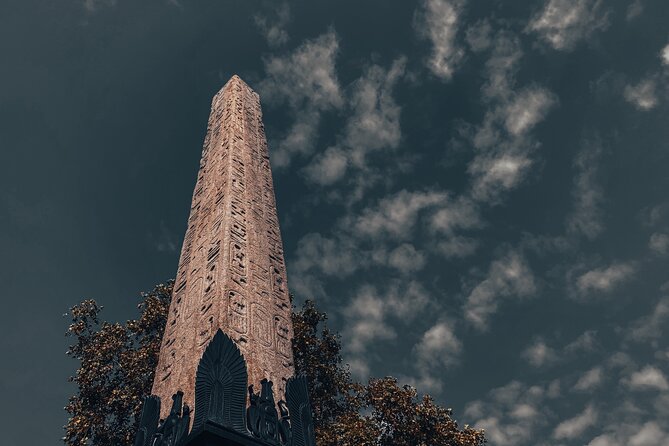
Then comes Cleopatra’s Needle, where the tour focuses on dark legends and the idea of Egyptian influence over British occultism. Even if you already know the obelisk as a London landmark, the occult angle changes how you look at it.
The key is your guide’s approach: they treat the obelisk as a cultural object, not just a photo spot. Egyptian symbols and references show up in occult traditions, and the tour uses Cleopatra’s Needle as a visible anchor for that connection.
If you’re the type who likes symbolism, you’ll probably enjoy this stop most. If you want only human stories and ignore symbols, you might find this section less gripping. Either way, it gives the tour a strong middle chapter.
Freemasons quarter, Ordo Templi Orientus, and Aleister Crowley nearby
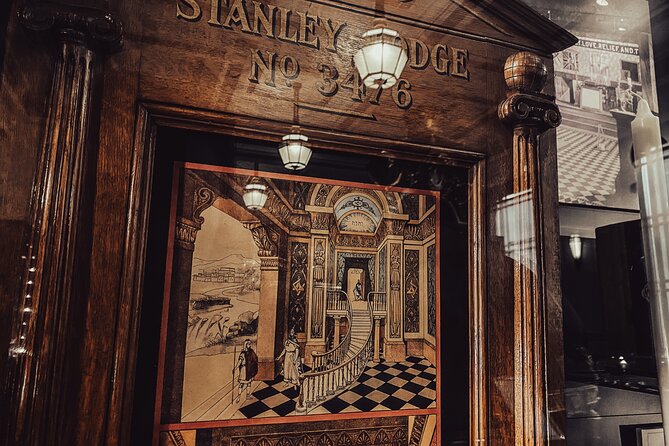
One of the most valuable parts of the route is where it shifts into the Freemasons quarter and adds the Ordo Templi Orientus. The listing calls out a particularly influential member, Aleister Crowley, tying him to the walking route with a real sense of place.
This section helps you understand why a “secret societies” theme is more than a gimmick. Freemasonry and related esoteric movements have reputations that range from conspiracy to craft. When a guide connects names and orders to real London neighborhoods, you can tell the difference between vague myth and concrete historical influence.
This is also where the private format pays off. If your group wants to focus on Freemasonry, or on Crowley specifically, a good guide can shift emphasis without throwing off a big bus crowd.
Trafalgar Square: secrets about the lions

Next is Trafalgar Square with a focus on the secrets tied to the Trafalgar lions. This is a short stop, but it can still be effective because lions are such a recognizable part of the square. Your guide uses that familiarity to introduce a layer of meaning you might not notice on your own.
Because the time here is brief, go in with one mindset: you’re not seeing “everything” in Trafalgar Square. You’re getting a story-guided glance, where the point is what the lions represent in the occult or symbolic framing of the tour.
If you want longer explanations, this is exactly the kind of spot where your guide’s pacing matters.
Covent Garden and Bloomsbury: the magical world through neighborhoods
Then the route moves into Covent Garden, described as a stop to “explore Covent Garden.” After that, you enter Bloomsbury, framed as a magical world of one of London’s oldest areas.
These neighborhood stops are less about a single named site and more about atmosphere plus context. Covent Garden works well as a transition zone because it’s busy and visually rich, and it’s a natural place to reset your brain after the darker material earlier.
Bloomsbury is where the tour can feel more “London-specific,” since it’s strongly linked in popular imagination to learning, ideas, and writers. Even though the stop is short, your guide’s task is to connect the neighborhood feel to the occult theme so it doesn’t turn into generic sightseeing.
British Museum area: mysterious objects without the museum crowding
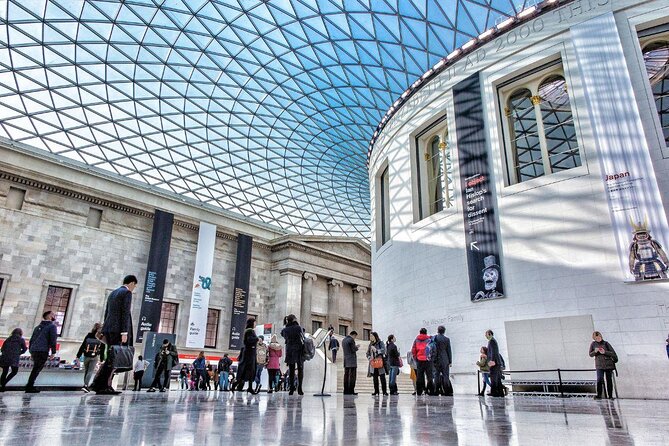
The final major stop is the British Museum area, described as a chance to walk by and learn about mysterious objects. The tour notes show it as admission ticket free, which suggests you’re not doing a full ticketed museum visit.
This can be a smart choice for a 3-hour walk. You keep momentum, stay in story mode, and get pointed context about objects without the time sink of a museum circuit. It also means you can keep your evening open, rather than losing half a day in galleries.
The tradeoff is obvious: if you want to actually see every artifact up close, a walk-by will feel limited. But as a guided taste that tells you what to look for later, it can be a great lead-in.
Guides, tone, and pacing: why your guide choice matters
This tour lives or dies by how the guide handles time and detail. One positive experience highlights Valerie and emphasizes how she explained things in detail and kept the stories engaging. Another great experience calls out Dani, describing the tour as feeling like walking with an old friend, with strong detail and a smooth flow.
On the flip side, there’s a fair criticism that some stops can feel a bit cursory, and that there’s a lot of walking compared with the number of stops. That doesn’t mean the tour is bad, but it does mean you should go in knowing it’s a short route with stories that may not fully satisfy deep academic cravings at every single site.
My practical take: if you’re ordering this as a one-time specialty tour, prioritize your top three interests before you arrive. Then, during the walk, lean into your guide for the parts you care about most, and don’t expect every stop to get equal depth.
Who this tour fits best (and who should pick something else)
This tour is a strong match if you:
- enjoy occult history and want London locations tied to names like Eliphas Levi and Aleister Crowley
- like secret societies and symbolic stories, not just “dates and kings”
- prefer a private format with a guide who can answer questions in your group’s direction
It’s less ideal if you:
- want a lighthearted ghost tour with no dark subject matter
- hate walking and want a sit-down, ticketed schedule
- expect a full museum experience at the British Museum stop
If you’re traveling with friends who enjoy spooky history but also appreciate real place names, this can be a memorable way to vary your London day from the standard big-ticket sights.
Should you book Secret Societies, Freemasons and Occult London?
Book it if you want a London walk that feels like a guided investigation, with Freemasons, the Golden Dawn, and Egyptian symbolism tied to places you can find again later. The private format and the chance to hear detailed explanations from guides like Valerie or Dani make it feel personal rather than generic.
Skip it or consider a different style of tour if you crave lots of time at each stop or you need a fully in-depth museum visit. The route is short, it covers ground, and some segments can feel more like story snapshots than full chapters.
If you like your London a little darker and more specific, this is a fun, odd, and genuinely thematic way to spend three hours.
More Tour Reviews in London
Not for you? Here's more nearby things to do in London we have reviewed








More London City Tours worth a look.
 ★ 4.6The London Eye Entry TicketTickets from $3935,875 guest reviews
 ★ 4.7From London: Harry Potter Warner Bros Studio TourTickets from $11726,588 guest reviews
Westminster to Greenwich River Thames CruiseTickets from $2222,836 guest reviews
Magical London: Harry Potter Guided Walking TourTickets from $2022,044 guest reviews
★ 4.7From London: Harry Potter Warner Bros Studio TourTickets from $11726,588 guest reviews
Westminster to Greenwich River Thames CruiseTickets from $2222,836 guest reviews
Magical London: Harry Potter Guided Walking TourTickets from $2022,044 guest reviews
 ★ 4.6Madame Tussauds LondonTickets from $3620,915 guest reviews
 ★ 4.5Stonehenge, Windsor Castle, and Bath from LondonTickets from $11118,662 guest reviews
 ★ 4.7Warner Bros. Studio Tour with TransfersTickets from $14417,586 guest reviews
 ★ 4.7Tower Bridge Entry TicketTickets from $2115,560 guest reviews