
REVIEW · LONDON CITY TOURS
London Street Art Tour of the East End Exclusive Walking Tour
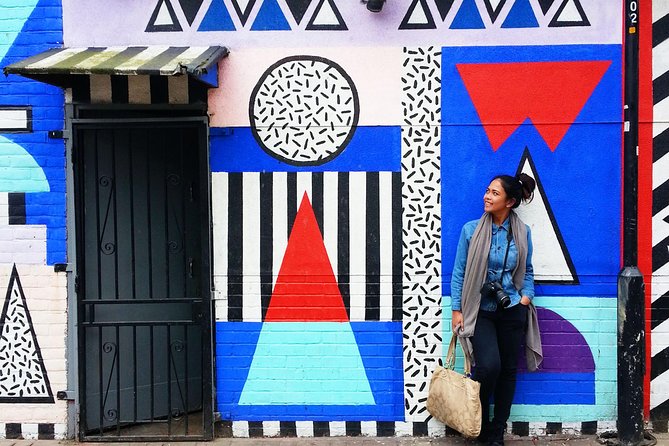
Street art hits different with the right guide. This London East End tour mixes street art sightings with neighborhood stories that go way beyond postcard London.
I like how the pace feels relaxed, so you can stop for photos and look longer at the pieces that catch your eye. I also love the pairing of iconic names like Banksy and Shepard Fairey with real East End context, from Kray gangsters to Cockney word origins.
One consideration: it is still a walking tour with outdoor stops, and some places on the route may not be accessible from the inside due to security or local rules, so plan around that if you want lots of indoor time.
Key things to know before you go
- Private-guide focus so you can ask questions while you walk, not at the end of the tour
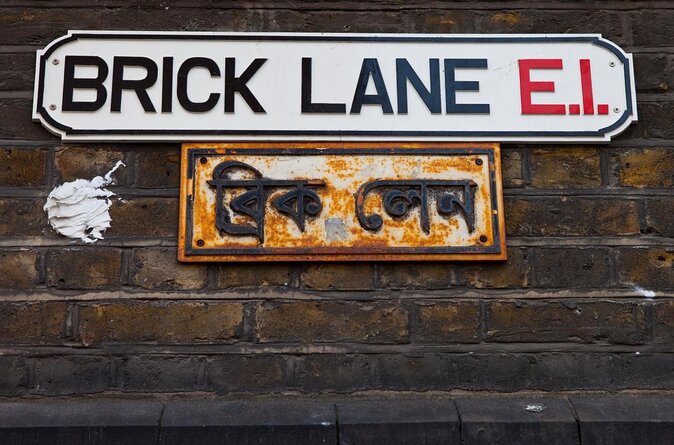
- Street art, plus the why behind it, including Shoreditch and Brick Lane’s shift over time
- Photo-friendly route through known street-art corridors and market areas
- Markets and historic passages like Petticoat Lane and Artillery Passage, not just murals
- Story stops that connect street art to darker East End tales, including Jack the Ripper context
- Rain or shine walking with a route adjustment option during national celebrations
East End street art, with the stories that make it click
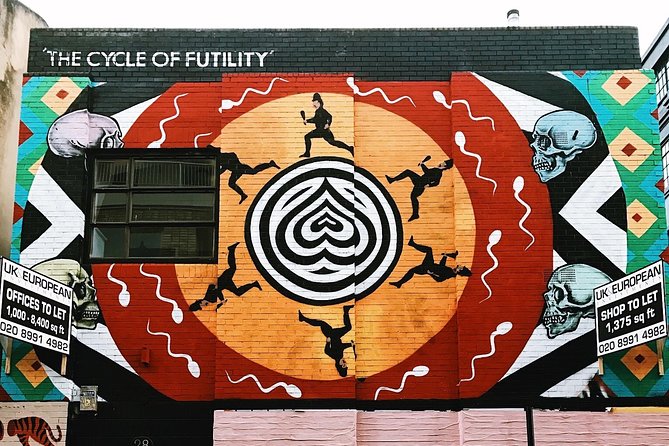
If you only walk the famous streets, you still see the art. But you miss the meaning. This tour is built to help you understand why the East End is covered in stencils, tags, murals, and big bold statements, and why those walls changed as the neighborhood changed.
The big win is story plus visuals. You’re not just hunting for famous names on a wall. You’re learning how local identity, crime lore, working-class life, immigration, and later creativity all shaped what you see today. And because this is a private walking tour for your group, you get to ask follow-ups as you go, which is exactly when the details start to make sense.
I also appreciate the tone of the guides. In the feedback I saw, guides including Becky L and Ivo are praised for keeping the history readable and the walking fun. That matters, because East End history can sound heavy if someone dumps facts nonstop. Here, it is more like a moving conversation while you look at the street.
You can also read our reviews of more walking tours in London


Cost and value: what you are really paying for
At $62.54 per person for about 2.5 hours, this isn’t a free-for-all street hunt. You are paying for three things: a guide who knows the connections between places and art, a route that hits multiple neighborhoods efficiently, and a pace that lets you linger.
You’ll often do better on value when you have a specific interest. If your goal is Banksy-style street art but you also want the East End background, that’s where the pricing starts to feel fair. If you only want general sightseeing and you do not care about stories, you can probably recreate a similar route on your own. But if you do care, the guided element saves time and turns random walls into a readable street language.
There are also small signals that this runs as a popular, organized experience. It is commonly booked about 32 days in advance, and it scores a strong 4.8 rating based on 12 reviews, with 92% recommending. That usually means people find the walking time well spent.
Where to meet, and why early clarity matters
The tour gives two location cues that you should treat as part of the same starting area. Your meeting point is listed as the Kindertransport statue at Liverpool Street Station, and the tour description also references starting at the Goat Statue on Brushfield Street for the first cultural overview.
My practical advice: use the exact meeting spot shown on your confirmation message. Either way, plan to arrive a few minutes early. London stations can be easy to navigate, but crowds and construction happen, and you do not want to stress before the walking starts.
The tour ends at Shoreditch High Street station, which is a handy built-in convenience. It means you are not stuck backtracking to get transit right after you finish.
The walking route: Shoreditch and the art-driven East End
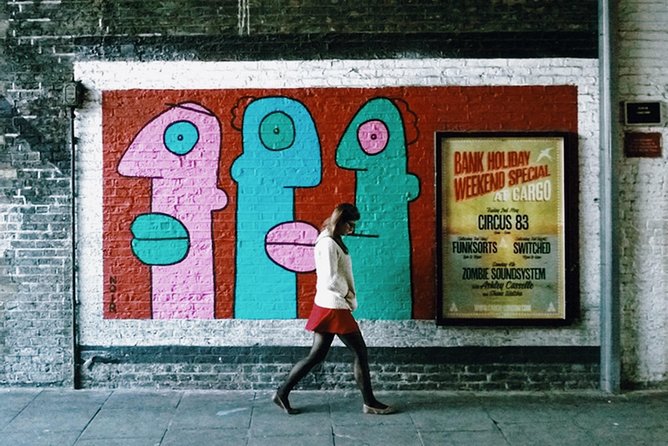
The experience is centered on East London neighborhoods that have gone through big identity shifts. You start with a cultural overview, then you head toward Shoreditch High Street and the streets around it.
Here’s what you should expect in real life: the guide sets context, then the streets begin to read differently. You’ll hear about the East End’s earlier reputation and its darker folklore, including the years linked to the Kray Twins. As you walk, that backstory gives extra weight to the artwork you see later, because you begin to understand the neighborhood as more than trendy content for social media.
You’ll also learn how East London’s working-class identity connects to today’s creative scene. That transformation from local trades and simple food stalls into an arts and fashion magnet is a major theme of the tour. You’ll walk through streets where you can still spot the sensory layers of the area: curry-house energy mixed with design shops, and older market areas with newer creative storefronts.
Brick Lane and Shoreditch High Street: when streets become your museum
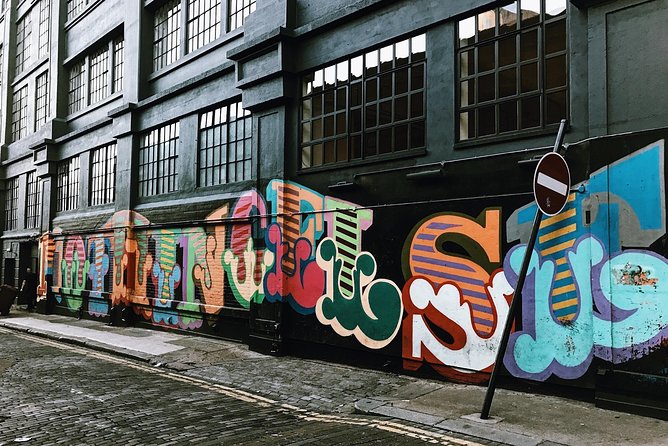
Brick Lane is one of the main storytelling corridors, and it is also one of the best places to see the range of street art. You’re walking along a street known for markets and breweries, but on this tour it’s about more than commerce. It’s about how art has become part of the neighborhood voice.
One reason this stop works is that it combines language and culture. You’ll hear about the origins of Cockney rhyming slang, which may sound like a sidebar until you realize how wordplay and street identity often travel together. Then, as you move through the area, your guide connects that street creativity to what is painted, pasted, and stenciled on the walls.
This is also where the tour leans into the recognizable poster names. You’ll capture photographs of street art attributed to iconic figures including Banksy and Shepard Fairey. The value is not only seeing the pieces, but seeing how the guide frames them. You start noticing details you would otherwise walk past, like how different styles cluster in certain blocks or how newer layers sit next to older street textures.
Shoreditch High Street then rounds things out with atmosphere. It’s described as a strong base for visitors looking for bars and restaurants, with a lively mix of old and new. On this tour, you’ll use that energy as a springboard. The guide doesn’t just end the walk and wave goodbye. You’ll also get practical recommendations for how to spend the rest of your time in the area, which can be a big help after a long chunk of sightseeing.
More London tours and experiences for the shortlist



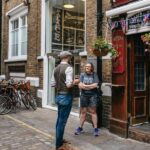


Petticoat Lane Market: why a 400-year market belongs on a street art walk
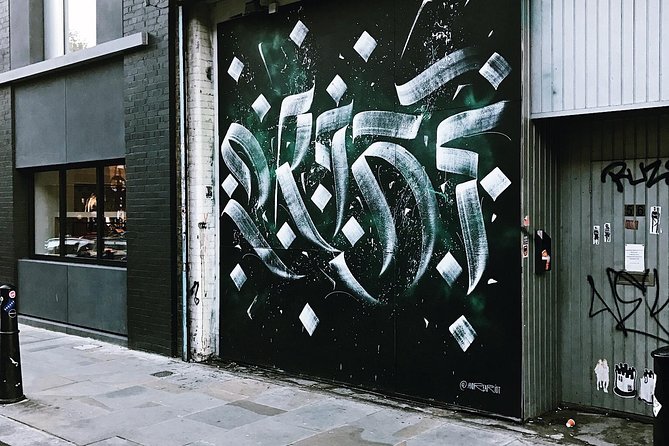
One of the smartest parts of this tour is that it does not treat street art like a standalone hobby. It treats it as part of lived street life. That’s why Petticoat Lane Market fits so well.
You’ll head to Petticoat Lane Market, described as world-famous and established over 400 years ago by the French Huguenots. Back then, petticoats and lace were a core part of what sellers brought to the stalls. Today, it is known mainly for clothes for men, women, and children.
Why I think this works: street art often grows where people already gather. Markets create foot traffic, social talk, and constant visual change. Even if you never buy anything, you get a sense of how the East End breathes. That makes the murals and stencils feel less like random decoration and more like commentary on what is happening now.
A drawback to consider: markets can be crowded at peak times. If you hate shoulder-to-shoulder walking, go in with flexible expectations and focus on the route and the photos you came for.
Artillery Passage: a quick step into older London lanes
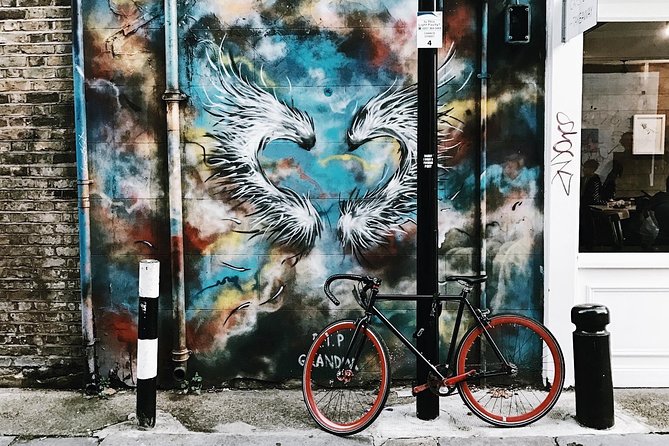
Next comes Artillery Passage, a place that offers a rare look at 17th century London. Despite modern urban changes, the conservation area gives you narrow lanes, passages, and courtyards that feel like a snapshot of earlier inner-city life.
This stop adds a cool contrast. Street art is often associated with the present, but it’s also layered on top of real older spaces. When you stand in these narrow passages, you get a stronger sense of how streets evolve over centuries and why modern art can look extra dramatic when it appears on older stone and hidden courtyards.
The time here is short, so keep your eyes up. Take photos if you like, but also just pause and let the scale sink in. This is one of those places where your phone camera can flatten the experience, so a quick moment of looking with your own eyes matters.
Old Spitalfields Market: Victorian bones and today’s shopping
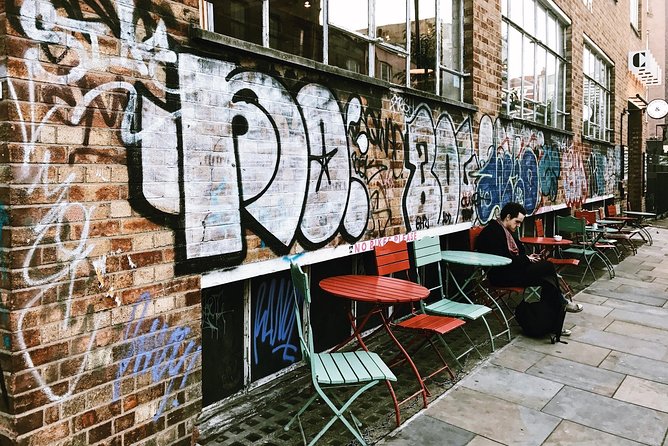
Old Spitalfields Market is one of the better-known Victorian market halls in London, and it is a nice bridge between street-level creativity and a more formal shopping and dining setup. It was built in the 1800s and refurbished in the early 2000s. Now it is a unique mix of boutique fashion, design, lifestyle stores, and distinctive places to eat and drink.
Even if you do not plan to buy anything, it’s a good stop because it shows how the East End adapted. Street art often thrives in zones that feel slightly in-between. This market hall is one of those places where you can see the neighborhood’s old architecture doing new work.
Because the tour time at each stop is limited, you’ll likely get a quick loop rather than a long browse. Use it to orient yourself. If you want to come back later, your guide’s recommendations can help you choose where to spend extra time.
Whitechapel: Jack the Ripper context without turning it into a scare show
As the walk moves into Whitechapel, the guide provides context linked to the Whitechapel murders and Jack the Ripper in the late 1880s. This is not set up as a horror-tour performance. It’s framed as history and atmosphere, part of how you understand the East End’s reputation and why certain stories stick in the local imagination.
Why it matters on a street art walk: street art can be personal, political, and sometimes dark. If you understand that older legends shaped how people talked about these streets, you’ll read some artwork differently. The guide helps you avoid the trap of viewing street art as decoration only.
If you are sensitive to true crime stories, you can still do this tour, but go in knowing the topic is raised. You might want to mentally prepare for a darker historical note during the walk.
Pace, photos, and what to bring for a 2.5-hour walking tour
This is a walking tour with a relaxed pace. The highlight promise is that you can explore at your leisure, which in practice means you get time to stop when you want and take photos of the street art that grabs you.
Still, it is only about 2.5 hours, so the route is efficient. You will not have time to wander off for long detours. My advice is to plan your day around the tour, not squeeze it in between major timed museum visits.
What to bring is practical and simple:
- Comfortable shoes, because you are walking multiple East End blocks and into passages
- A bottle of water
- An umbrella if rain is in the forecast
- A hat in summer, since weather can shift fast
Also, no large bags or suitcases are allowed. If you are traveling with big luggage, plan to store it elsewhere before you join the walk.
The tour runs rain or shine. That means the street art and historic lanes are the show, even in wet weather. I actually like rain for photos, but you still want an umbrella and dry shoes if you can manage it.
Guide quality and how a private tour changes the experience
This is a private tour/activity, meaning only your group participates. That matters more than people think. You are less likely to get rushed, and you can ask small questions on the spot, like why certain styles show up in specific pockets, or how the neighborhood transformation connects to the art.
One detail worth knowing: the tour says the guide is exclusively for you, but it does not apply if you choose a “SAVE” semi-private option. If you truly want quiet, flexible pacing, pick the fully private version when available.
As for guide style, the feedback highlights guides like Becky L and Ivo for making history interesting and street art vivid and varied. That is the kind of combination that turns a photo walk into a real learning experience without making it feel like a lecture.
Who should book this East End street art tour
This tour is a strong match if you want:
- A guided London street art tour that explains what you are looking at
- East End context, including the shift from working-class neighborhoods to modern creative hotspots
- A route that mixes street art with markets and historic passages
- Photo time, especially for pieces linked to big names like Banksy and Shepard Fairey
It’s also a good fit for first-timers to London’s East End. You get a focused orientation in one half-day walk, and you finish near Shoreditch High Street station, which makes it easy to continue your day.
If you already know the neighborhood well and you only care about spotting murals fast, you might find more freedom going self-guided. But if you want the stories tied to the walls, a guided route is the easier way to get it right.
Should you book?
Yes, I’d book this if your goal is street art with context, not just a list of famous murals. The price for a 2.5-hour private-style walking experience feels reasonable when you factor in guide time, the variety of stops, and how the tour is framed around neighborhood change, Cockney word origins, and the East End’s darker legends.
Book it especially if you like your sightseeing with a narrative thread. The best moments here are the ones where the art suddenly looks intentional, because you know the street life behind it.
If your perfect day is mostly inside museums or you dislike walking for 2.5 hours, you may want to pick a different format. But if you want East End streets to become your classroom and your camera roll, this is a smart choice.
FAQ
Where do I meet the guide?
The tour lists the start at the Kindertransport statue at Liverpool Street Station (14 Liverpool St, London EC2M 7NH, UK). The tour also references the Goat Statue on Brushfield Street in the tour description, so check your booking confirmation for the exact meeting point.
What is the tour length?
The duration is about 2 hours 30 minutes, and it is also described as 2.5 hours.
Is this tour private?
Yes. It is a private tour/activity, and only your group will participate.
Does the tour run in bad weather?
Yes. The tour will run, rain or shine.
What areas will the route cover?
You will walk through East End neighborhoods including Shoreditch and Brick Lane, and you will also visit stops such as Petticoat Lane Market, Artillery Passage, Old Spitalfields Market, and Whitechapel.
Is the admission fee included for the stops?
Admission is listed as free for the stops.
What should I bring, and can I bring large luggage?
Wear comfortable shoes, bring a bottle of water, and consider an umbrella and a hat depending on the weather. No large bags or suitcases are allowed.
More Walking Tours in London



More Tours in London





More Tour Reviews in London


Not for you? Here's more nearby things to do in London we have reviewed









More London City Tours worth a look.
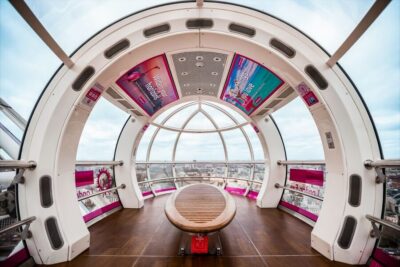 ★ 4.6The London Eye Entry TicketTickets from $3935,875 guest reviews
 ★ 4.7From London: Harry Potter Warner Bros Studio TourTickets from $11726,588 guest reviews
Westminster to Greenwich River Thames CruiseTickets from $2222,836 guest reviews
Magical London: Harry Potter Guided Walking TourTickets from $2022,044 guest reviews
★ 4.7From London: Harry Potter Warner Bros Studio TourTickets from $11726,588 guest reviews
Westminster to Greenwich River Thames CruiseTickets from $2222,836 guest reviews
Magical London: Harry Potter Guided Walking TourTickets from $2022,044 guest reviews
 ★ 4.6Madame Tussauds LondonTickets from $3620,915 guest reviews
 ★ 4.5Stonehenge, Windsor Castle, and Bath from LondonTickets from $11118,662 guest reviews
 ★ 4.7Warner Bros. Studio Tour with TransfersTickets from $14417,586 guest reviews
 ★ 4.7Tower Bridge Entry TicketTickets from $2115,560 guest reviews
Continue by place or experience