
REVIEW · WALKING TOURS
Misfits of Covent Garden Walking Tour
Covent Garden has a darker side. This walking tour threads together theatre, markets, and misfit London backstories from St Paul’s Church to Seven Dials. You get a tight route, short stops, and a local guide who keeps the facts moving instead of piling them up.
What I love most is the small group size (up to 15), which makes it easy to hear and ask questions as you go. I also like the mix of places: St Paul’s Church (Actor’s Church) for an inside look, then a lot of outside, walk-up London that feels doable even if you have only a couple hours.
The main thing to consider is that St Paul’s mini tour is subject to availability, so if the church is hosting an event or service, entry may not happen. Still, the rest of the walk gives you plenty to work with.
Key Highlights Worth Your Time
- Actor’s Church at St Paul’s Church Covent Garden, with a mini inside visit when available
- Market history that changes over centuries, not just a quick photo stop
- Jubilee Market and nightlife connections, tied to how the area used to function
- Theatre and opera landmarks you can appreciate from the sidewalk as you learn who shaped the scene
- Seven Dials’ sundial finale, after stories of gin, prostitution, and 19th-century slum life
- Neal’s Yard and Drury Lane Gardens, color and calm after the tougher stories
A 3:00 pm Covent Garden Loop That Fits Real Sightseeing Days
This tour is built for the middle of a London day, starting at 3:00 pm and running about 2 hours. That timing is smart because Covent Garden is active in the afternoon, but you are not starting at the crack of dawn like some “full London” tours do. You also end at Seven Dials, so you can keep walking afterward or pivot to dinner nearby.
The route is mostly central and easy to follow, with short segments and frequent stops. That matters because Covent Garden can feel like sensory overload if you only wander on your own. Here, you get a thread. One story leads to the next, and you end with a payoff at Seven Dials.
You can also read our reviews of more walking tours in London


Price and Value: $34.45 for Two Hours of City Context
At $34.45 per person, you are paying for three things: a guide, a focused route, and targeted access. The big value point is that St Paul’s Church includes an admission ticket for the mini inside visit. Even if you never see a single stage show, the tour still helps you understand the world that produced the neighbourhood you are standing in.
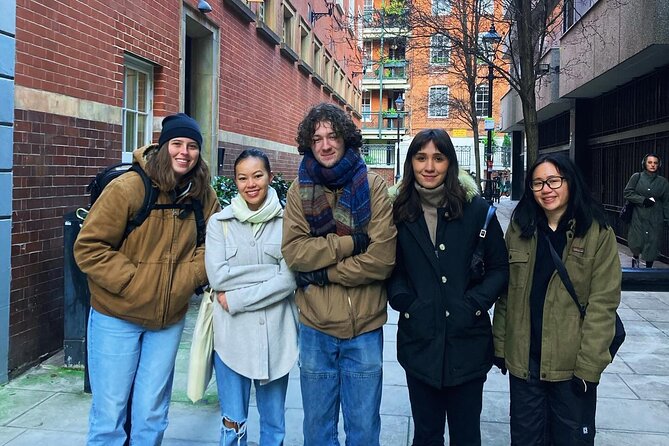
You also get a small group (maximum 15 travelers). In London, guides in bigger crowds can turn into mic and shuffle. Here, it is much easier to actually listen and connect the details. The tour is booked about 38 days in advance on average, which is a good sign that the timing works for people who plan ahead and still want a guided experience.
Meet at Long Acre, End at Seven Dials Sundial
Your starting point is Covent Garden Underground Ltd, Long Acre, London WC2E 9JT. The walk finishes at the sundial monument in Seven Dials (London WC2H). That end point is not random. Seven Dials is part of the same local story arc, and the sundial gives you a clear visual marker for closure.
You will also appreciate the practicality: there is mobile ticketing, it is in English, and the tour runs near public transportation. If you are trying to stitch together a day plan, this route is easy to plug into other Covent Garden plans.
St Paul’s Church (Actor’s Church): Inside Access When the Timing Allows
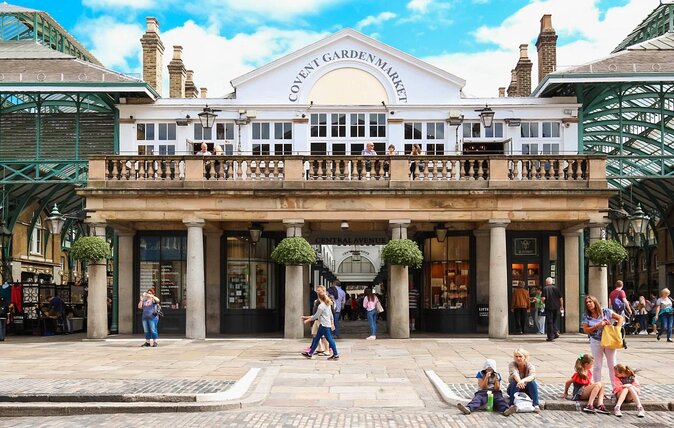
Stop one is St Paul’s Church Covent Garden, often called the Actor’s Church. It is notable because it is one of the few remaining buildings from the original Covent Garden Piazza. That alone is worth your attention. Piazza buildings and grand squares have mostly vanished, but here you can still stand in a space linked to the stage world.
The tour includes a special mini tour inside the church, with entry via an included ticket. The catch is real: you can’t always guarantee entry if the church has an event or special service. If that happens, you should still treat this opening as a concept preview. The guide’s framing helps you understand why the neighbourhood’s theatre energy mattered, and it sets up the later stops around Drury Lane and the opera house.
What to do with this as a visitor: arrive ready to go in if you can, but do not build your whole afternoon around it. If entry is restricted, you will still get the contextual story that makes the next streets and buildings more meaningful.
Covent Garden Market Building: A Place That Kept Changing
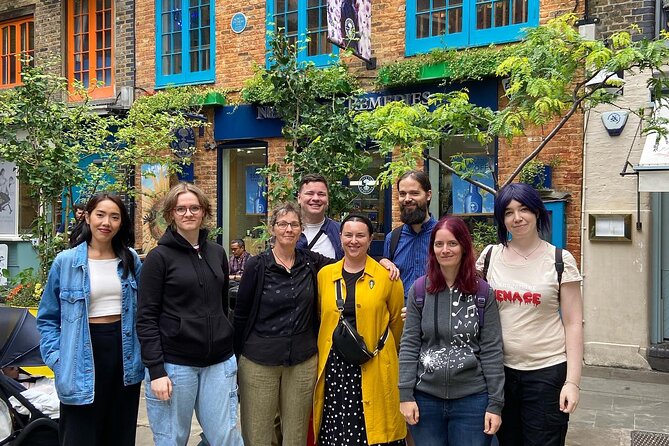
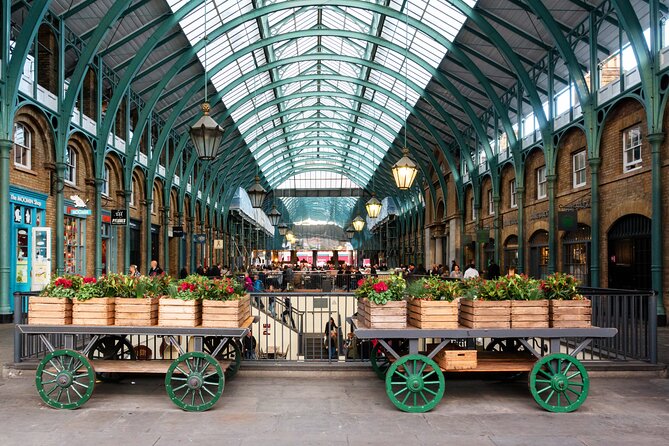
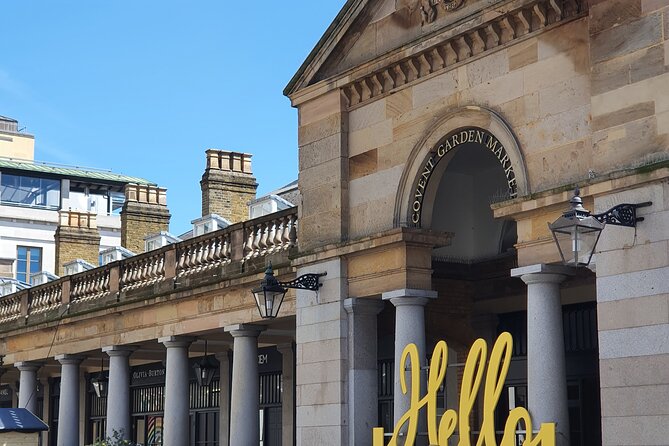
Next comes Covent Garden itself, focusing on the market building and how the market has shifted through the centuries. This is one of those places where your eyes think you know what you are looking at, because it is famous. The value here is learning how the function of the market changed, and how that echoed the neighbourhood’s social life.
Expect a short, guided look inside and around the market building. The stop is around 20 minutes, and the pace is right for a walking tour. You do not get stuck waiting for people to catch up, and you avoid the problem of spending your entire afternoon inside one location.
If you like history that explains daily life, this is a strong stop. It connects the modern tourist zone to the earlier London world that fed it.






Jubilee Market: Where Local Traders Run the Show
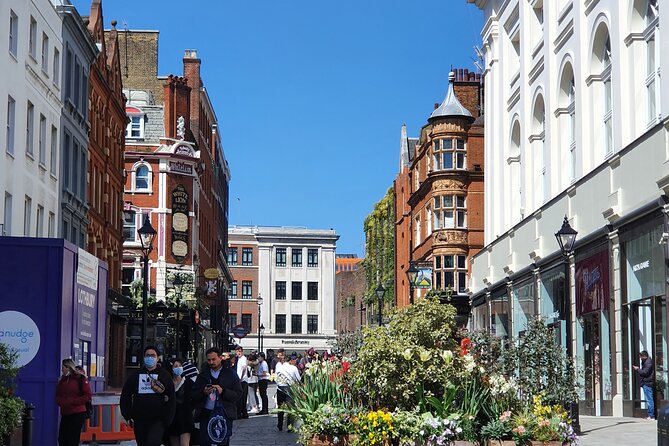
Then you shift to Jubilee Market. The key detail is that it is the only market in London run by traders. That is a big deal when you think about what markets usually are in tourist-heavy areas. Many markets are curated for visitors now, but here the framing is about traders shaping the place.
You are there for about 10 minutes, and the focus is on Covent Garden’s nightlife and live entertainment tradition. In other words, this is not just “market stuff.” The guide uses the market as a doorway into how evenings used to play out in this part of London.
Quick practical note: because the stop is short, wear shoes you are comfortable standing in. You are not doing a slow browse here. You are collecting context.
Theatre Royal Drury Lane and Royal Opera House, Read from the Street
Two theatre landmarks anchor the middle of the walk: Theatre Royal Drury Lane and later the Royal Opera House.
At Theatre Royal Drury Lane, you do an outside stop for about 10 minutes. The framing is about eccentric characters and the social scene around London theatre. You are not buying a ticket in this moment, and that is okay. The goal is to help you notice how theatre shaped the neighbourhood’s identity, not just where the big building sits.
Then you move to the Royal Opera House, once known as the Theatre Royal Covent Garden. You are there for another 10 minutes, and the tour emphasizes that opera and ballet happen all year round. Since the admission ticket is listed as free for this stop, you are likely experiencing the location through guided viewing and storytelling rather than through a ticketed interior visit.
How this helps you as a visitor: theatre buildings can look similar from the street if you do not know the local story. The tour gives you names, social context, and the “why” behind the crowds. After this, you will be able to look at the buildings and think about the people who used them.
Neal Street, the Gin Craze, and Seven Dials’ Harder Past
Now the tour turns more serious. At Neal Street, you learn about Covent Garden’s prostitution trade and the Gin Craze, and then you connect that street story to Seven Dials, once described as one of London’s great slums.
This portion is short, about 10 minutes, but it packs a lot of meaning into a small space. What makes it effective is the build-up: you have already spent time with theatre and markets, so you are not just hearing about crime in a vacuum. You are seeing how all these forces lived side by side in a real city neighbourhood.
Then the walk ends at Seven Dials. The final stop is about 5 minutes, centered on the sundial monument. Finishing at a physical landmark helps the whole story land in your head. You can stand there and mentally place the harder themes you heard earlier into a street grid you can actually recognize later.
If you do not usually seek out darker neighbourhood history, this stop can feel intense. I think it is handled well because it is tied to place and time, not shock value.
Neal’s Yard and Drury Lane Gardens: The Color and the Pause
After the tougher stories, you get two relief stops that are small but memorable.
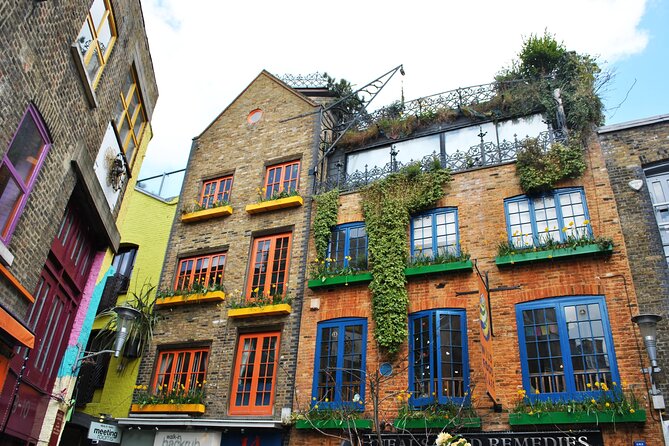
First is Neal’s Yard, a colorful courtyard you can walk into and breathe for a moment. It is listed as about 5 minutes, and the tour’s goal is likely to show you the shift from street-level hardship to the quirky spaces that make people fall in love with the area.
Next is Drury Lane Gardens, about 10 minutes. Here you learn it was once a graveyard, and there is a connection to Dickens’ Bleak House. It is also described as a children’s playground and a heritage site, and importantly, it was the first project by the UK’s National Trust.
This is the part of the tour that makes your brain go, “Oh, that is why this area feels different from just another central London shopping strip.” It is not only the buildings. It is how the city repurposed space.
If you want a practical takeaway: pause here, let your feet rest, and look around. This stop is where the tour’s mood changes, and it helps you appreciate how London layers eras on top of each other.
Who This Tour Fits Best (and Who Should Pick Another Plan)
This walk works best if you like guided storytelling and want a short, high-impact route. It is also a good choice if you have been to London once and still feel like you missed the human details behind the postcards.
It is not ideal if you want a long list of ticketed sights, museums, or skip-the-line entries. This tour is built around guided viewing, short inside moments when possible (especially St Paul’s), and outdoor stops that keep the pace moving.
Because it is English and runs in a group up to 15 travelers, it is also a nice option for solo travelers and couples. If you like having other people to ask questions around, this size is friendly without feeling crowded.
One more practical fit check: the tour requires good weather. If London is throwing rain at you, you might want a flexible day plan.
Quick Tips to Make It Feel Effortless
- Bring comfortable walking shoes. The tour is only about 2 hours, but London sidewalks add up quickly.
- Expect short stops and fast transitions. If you are the type who loves lingering, you can do that after the tour ends at Seven Dials.
- If St Paul’s inside entry is important to you, keep an open mind. The mini tour is subject to availability due to events or services.
- Use the end point. Seven Dials is a natural springboard for your next move, including late afternoon dining.
Should You Book Misfits of Covent Garden?
I would book this tour if you want a sharp introduction to Covent Garden that goes past the usual highlights. For the money, you get a focused 2-hour walk with a story thread that ties together theatre, markets, gin and slum history, and the calmer pockets like Neal’s Yard and Drury Lane Gardens.
The best reason to choose it is that the guide work seems to land with people. Names like Charlotte, Cecily, and Ellie come up again and again for keeping the walk engaging and well paced. If you get one of those guides, you are likely to feel like the area has a point beyond sightseeing photos.
The main reason to pause is St Paul’s inside visit. If entry is denied on the day, the tour still works, but you lose that one included inside moment. If you can handle that possibility, this is a strong way to understand what makes Covent Garden different.
If you have a half-day and want real context fast, this is one of the easier choices you can make.
More Walking Tours in London



More Tours in London


More Tour Reviews in London
Not for you? Here's more nearby things to do in London we have reviewed









More Walking Tours worth a look.
 ★ 4.7The Original Jack the Ripper Walking TourTickets from $257,833 guest reviews
 ★ 5.0Tour for Muggles The Ultimate Harry Potter Walking Tour in LondonTickets from $234,684 guest reviews
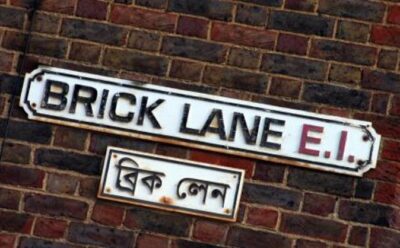 ★ 5.0London Jack The Ripper Guided Walking TourTickets from $03,131 guest reviews
 ★ 4.7Harry Potter Movies Walking Tour (Kids Go Free)Tickets from $203,071 guest reviews
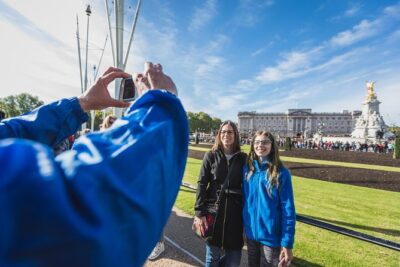 ★ 5.0Changing of the Guard Guided Walking Tour in LondonTickets from $251,793 guest reviews
 ★ 4.9The Great British Rock and Roll Music Walking TourTickets from $361,783 guest reviews
 ★ 4.5Jack the Ripper Walking Tour – Ripper Vision ToursTickets from $261,752 guest reviews