
REVIEW · LONDON CITY TOURS
History of London Photography Tour
A good photo starts with where you stand. This short London photography tour mixes iconic landmarks with quick, practical shooting coaching, so you leave with new ways to see the City of London.
I like the hands-on feel, especially the way your guide can help you get your camera settings working before you start. I also like the smart route, which threads history and architecture together so your pictures tell a story, not just a set of pretty buildings. One thing to consider: it is a tight 2-hour walk, so each stop is brief and you will need to move if you want the best angles.
You will get a pro-led, interactive experience aimed at both beginners and people who already shoot. The tour is built around a simple idea: you learn by doing, in real locations, with real lighting and real crowds.
Key Highlights You Should Know Before You Go
- Pro photo coaching on the move: you get guidance on composition, lighting, and how to frame London fast
- Free-entry photo stops: you can focus on pictures without extra ticket hassles at each main stop
- A route through layers of London history: from ancient worship sites to modern river views
- Classic City architecture with fresh angles: churches, bank buildings, and bridges shot like a portfolio piece
- Small group size: capped at 18, so you can actually get help without feeling lost
Why This 2-Hour London Photo Walk Works
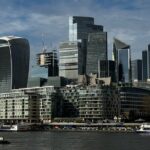
This is a compact tour, about 2 hours, and that matters. You are not spending the whole day traveling between spots and hoping you remember your camera settings later. You walk a focused route through the City of London and the South Bank, with lots of chances to practice on different building types.
The biggest value here is the way the guide teaches. You do not just get a lecture. You get prompts for what to try in that exact moment, like adjusting your perspective so the building lines lead your eye, or watching how light changes the shadows on stone and brick. If you are even a little rusty on aperture, shutter speed, or basic composition, this kind of course is a fast reset.
That also means you should bring the right mindset. You will take photos, then tweak, then take more. It is closer to a working session than a slow sightseeing stroll.
You can also read our reviews of more historical tours in London


Meeting Point at St Mary Woolnoth, a Starting Shot With Real Old Bones
You begin at Imprint Church London, St Mary Woolnoth, on Lombard Street. This is a strong place to start because it sits right in the financial district, but its story goes way beyond office towers.
The church site has been used for worship for at least 2,000 years, and traces of Roman and pagan religious buildings were discovered under the foundations of the current church. The present building was rebuilt in 1727 and commissioned from Nicholas Hawksmoor.
Photo-wise, this stop gives you two things right away:
1) A subject with depth, so your pictures feel grounded in time, not just architecture.
2) Details you can zoom in on, like stone textures and church features, then zoom back out to include the surrounding streets.
If you like variety, start here with a mix. Take one wide shot that puts the building in context, then follow up with a tighter frame that highlights something specific. That is the kind of habit you can use all day.
St Mary Woolnoth, then the Royal Exchange: How to Frame Power
From that initial church shot, you move into the world of commerce and institutions, which is where your guide’s composition tips really help.
At the Royal Exchange, you are photographing a landmark closely tied to London’s trading history. The tour gives you time to get angles that feel intentional, not random. In a place like this, it is easy to just point your camera and hope the building looks good. Instead, you are trying to show structure, symmetry, and the way the street setting interacts with the facade.
A practical way to shoot stops like this:
- Look for lines and edges that can lead toward a focal point.
- Try a lower angle, so the building feels taller and more imposing.
- Then switch and grab an opposite view that shows the surroundings, so your set includes both “icon” and “context.”
This tour encourages that sort of thinking, and it is one reason it feels more like creating a personal portfolio than collecting souvenirs.
Bank of England: Learning Angles on One of London’s Most Photogenic Facades
Next up is the Bank of England, a building with history and architecture that attracts photographers for a reason. You get time to work out the best angles, with your professional guide helping you find perspectives that actually use the space instead of fighting it.
The Bank of England stop is also a good lesson in how to photograph monumental architecture without it turning into a flat postcard. You can often improve your images just by changing how you handle perspective. Even without fancy gear, a quick shift in height, a small step left or right, or a different focal length can make a building feel more dimensional.
If your camera can do it, consider:
- Bracketing exposures (or at least trying different brightness settings) because stone and metal surfaces can trick your camera’s metering.
- Watching for reflections and glare, especially in brighter conditions.
- Keeping an eye on people in the frame, because in the City there can be sudden foot traffic that ruins a clean shot.
You are not expected to master everything in one stop, but you are expected to practice. That is the point.
Guildhall and St Mary Le Bow: Gothic Drama and a London-Icon Detail
The route then shifts to Guildhall, with its Gothic splendor and around 800 years of history. This stop is about texture and scale. Gothic architecture often rewards you for looking up and for shooting tight details, like carvings or patterns, not only for getting a full wide view.
Then you move to St Mary Le Bow Church. This is the kind of London photo stop that makes visitors grin, because it is tied to a very specific local tradition: according to tradition, true Cockneys must be born within earshot of the bells of St Mary-le-Bow Church. Even if you do not care about the lore, the building itself gives you a recognizable silhouette and a classic church-photo opportunity.
What I like about pairing Guildhall and St Mary Le Bow is that they teach two different styles:
- Guildhall rewards structure and craftsmanship.
- St Mary Le Bow pushes you toward iconic clarity and classic framing.
When time is short, you can still build a strong set by taking:
- One shot that shows the building’s overall shape.
- One shot that emphasizes a detail.
- One shot that includes a hint of the street for scale.
That mix keeps your final gallery from feeling repetitive.
You can also read our reviews of more photography tours in London

St Paul’s Cathedral to Millennium Bridge: From Classic Icons to Clean Lines
St Paul’s Cathedral is the nation’s church in the sense that it is wrapped up in major events across centuries. The tour spotlights moments like Catherine of Aragon’s marriage in 1501, Queen Elizabeth I after the Spanish Armada in 1588, and the execution of Guy Fawkes and co-conspirators in the early 1600s. You also learn that the building has witnessed those turning points, which adds weight to what might otherwise be just another big cathedral photo.
For photography, St Paul’s gives you a strong subject and countless angles. Your guide helps you capture memorable images of this iconic building, which usually means coaching you on how to align the dome, how to keep lines straight, and how to avoid messy framing when crowds or street elements intrude.
After St Paul’s, you move to the Millennium Bridge, the 325-meter London Millennium Footbridge opened in 2000 and linking Tate Modern with the City of London and St Paul’s Cathedral. This is a different photographic problem from St Paul’s. Here the goal is often about clean lines, negative space, and getting a sense of movement and connection across the river.
The best photos at bridge stops usually come from timing and position. Stand where you can see both banks or the bridge span, then shoot a few variations:
- One with the bridge dominating the foreground.
- Another that includes St Paul’s as a background anchor if your view allows it.
- A third that concentrates on the bridge lines, so it feels graphic rather than purely documentary.
This is also a good moment to test your camera habits. If you have been relying on auto mode, try changing one thing only, then compare results.
Tower Bridge and Tate Modern: Ending With River Drama and Brick Modernism
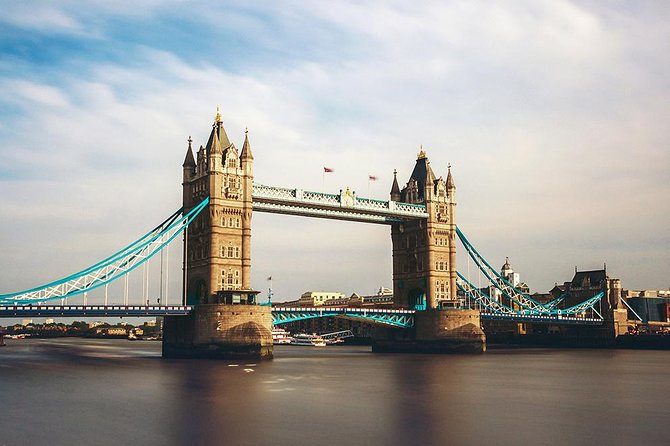
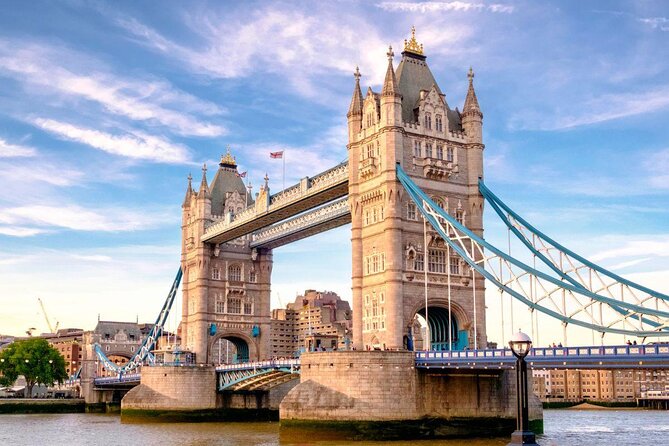
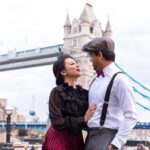
The tour continues to Tower Bridge for panoramic river views. This is your reward stop, where the location naturally offers wide compositions. If you like photos that feel cinematic, this is where you can try wide framing and also look for foreground elements that add depth.
A tip for bridges: try both a wide shot and a tighter crop. Wide shows the full story. Tight compresses the scene and often looks more like a finished artwork.
Then you finish at Tate Modern on the South Bank. You get to photograph the looming brick building that dominates the area. Tate Modern is housed in the former Bankside Power Station, designed by Sir Giles Gilbert Scott, the architect behind Battersea Power Station. Even if you are not an art museum person, the building is a strong photographic subject because it mixes industrial massing with modern gallery presence.
This finish matters because it closes your set with visual variety. You start with churches and City institutions, then move to bridges and river panoramas, and you end with bold brick geometry. That makes your final gallery feel intentional, not random.
Price, Group Size, and What You Need to Bring
At $71.63 per person for roughly 2 hours, this is positioned for value if you want practical instruction. The stops do not charge you for entry during the tour, and you are working with a professional guide focused on photography skills. That combination can be a better deal than paying for a generic walking tour plus trying to figure out camera basics on your own later.
But do not assume the tour includes equipment. You need your own camera or camera phone. If you show up with nothing to shoot, you will miss the whole point. If you do bring a camera, even a basic one, you will still benefit from the guide’s framing and lighting coaching.
Group size is capped at 18, which is small enough that most people can get help without waiting around for the guide. Still, it is a walking group. You should be comfortable moving at a steady pace and taking quick photo attempts.
What I’d Watch For If You Want More Than Famous Sights
A possible drawback is also part of the tour’s charm. It focuses on major, recognizable landmarks. If you want totally obscure backstreets and offbeat locations every ten minutes, you might feel the route leans toward the well-known side.
Also, each stop is timed, so you cannot spend 45 minutes perfecting one shot. If you love long, slow tripod sessions, you may feel a little rushed. For that reason, this works best if you like a mix of practice and variety.
If you want to get the most out of short stops, set mini-goals before each location. For example:
- St Paul’s: try one dome-centered composition and one street-level perspective.
- Bridge: shoot one wide and one line-focused crop.
- Tate Modern: aim for a strong vertical statement and a second shot with surrounding context.
Small goals help you avoid the scattershot approach.
Who This Photography Tour Suits Best
This tour is a strong fit if:
- You want a fast way to improve your photos without a full-day class.
- You enjoy walking and want your sightseeing connected to photography tasks.
- You are traveling with a mix of abilities, because the format is designed for different experience levels.
- You want both history context and practical shooting tips in the same session.
It is also great for London locals who think they know the City already. The mix of architecture and guided perspectives can turn familiar buildings into fresh subjects.
Minimum age is 18. If you are traveling with children, they must be accompanied by an adult, and both must have paid tickets.
Should You Book This London History Photography Tour?
Book it if you want a guided, skill-building photo walk that hits major architectural landmarks while teaching you how to shoot them. At $71.63 for about 2 hours, you are paying for pro guidance, free-entry stops, and a route designed for quick practice. That is a solid value if your goal is improvement and a stronger photo set.
Skip it if you want an all-day expedition, lots of free time per location, or strictly obscure locations. This is for people who like action, learning on the move, and getting a finished set of images by working smart, not by taking forever at one spot.
If you do book, bring a camera or phone, wear shoes that handle City sidewalks, and be ready to try new angles quickly. That is where the tour delivers the most.
FAQ
How long is the London photography tour?
The tour runs for about 2 hours.
What is the price per person?
The price is $71.63 per person.
Where does the tour start and end?
It starts at Imprint Church London, St Mary Woolnoth, 10-13 Lombard St, London EC3V 9AN, UK, and ends at Tate Modern, Bankside, London SE1 9TG, UK.
Do I need to bring a camera?
Yes. A camera or camera phone is required to get the most out of the tour.
Is there an age requirement?
The minimum age is 18 years. Children must be accompanied by an adult, and both must have paid tickets.
What group size should I expect?
The tour has a maximum of 18 travelers and runs with a professional photographer guide.
What happens if the weather is poor?
The tour requires good weather. If it is canceled due to poor weather, you will be offered a different date or a full refund.
More Historical Tours in London

More Tours in London

More Tour Reviews in London

Not for you? Here's more nearby things to do in London we have reviewed



More London City Tours worth a look.
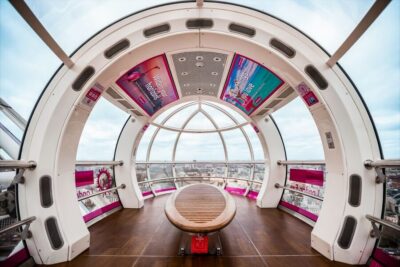 ★ 4.6The London Eye Entry TicketTickets from $3935,875 guest reviews
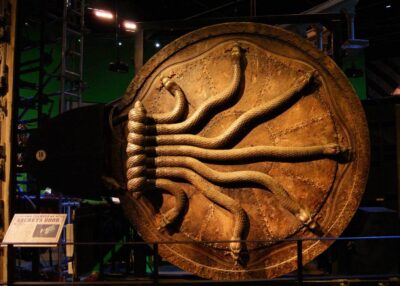 ★ 4.7From London: Harry Potter Warner Bros Studio TourTickets from $11726,588 guest reviews
Westminster to Greenwich River Thames CruiseTickets from $2222,836 guest reviews
Magical London: Harry Potter Guided Walking TourTickets from $2022,044 guest reviews
★ 4.7From London: Harry Potter Warner Bros Studio TourTickets from $11726,588 guest reviews
Westminster to Greenwich River Thames CruiseTickets from $2222,836 guest reviews
Magical London: Harry Potter Guided Walking TourTickets from $2022,044 guest reviews
 ★ 4.6Madame Tussauds LondonTickets from $3620,915 guest reviews
 ★ 4.5Stonehenge, Windsor Castle, and Bath from LondonTickets from $11118,662 guest reviews
 ★ 4.7Warner Bros. Studio Tour with TransfersTickets from $14417,586 guest reviews
 ★ 4.7Tower Bridge Entry TicketTickets from $2115,560 guest reviews
Continue by place or experience